If you manage property in Houston, parking is a recurring headache: unauthorized visitors taking resident spots, fire lanes blocked, abandoned cars, tenants complaining. The fix is a proper enforcement program with a legitimate tow company — but not every company in Houston qualifies.
Pick wrong, and you'll inherit lawsuits, bad reviews, and tenant turnover. Pick right, and the problem goes quiet.
The short version:
- Check their Google reviews first — a company known for illegal tows makes you the target of the complaints and lawsuits.
- Verify credentials — a current TDLR tow license, and a licensed VSF where the towed vehicles are stored.
- Your signage must meet Chapter 2308 — if it doesn't, no tow from your property is legally enforceable.
- It costs you nothing per tow — the vehicle owner pays the storage lot to get the car back; there's no monthly fee to you.
On This Page
Start with their reviews
Before anything else, search the Google reviews of any tow company you're considering. If you see patterns like:
- "Illegally towed my car from my own apartment"
- "Towed a resident with a valid permit"
- "Refused to return my property / refused to release my car"
- "Rude and unprofessional"
- Wrongful-tow lawsuits mentioned
...don't sign a contract with them. When you authorize that company to tow on your property, their bad actions become your legal exposure. Tenants sue the property owner, not just the tow company. The lawsuit might settle, but your reputation on Google, Yelp, and Apartments.com takes the hit.
Legitimate property-enforcement tow operators have reviews that look different — mix of neutral-to-positive, occasional complaints (inevitable when you're towing people's cars), but no pattern of lawsuits or accusations of fraud.
What to check before you hire
1. TDLR license. Every legitimate tow operator in Texas is licensed through the Texas Department of Licensing and Regulation. License status is searchable — takes 30 seconds. This license (with private-property authority) is what legally allows a non-consent tow from your property. No license = no legal tow.
2. Operator credentials on the scene. The TDLR license above is the credential that authorizes the tow you're arranging — an HCSO county permit is a separate thing that governs police-ordered and rotation tows, not owner-requested ones, so don't accept it as a substitute. On scene, the operator should carry a current TDLR tow-operator ID card; if they can't produce it, that's a stop.
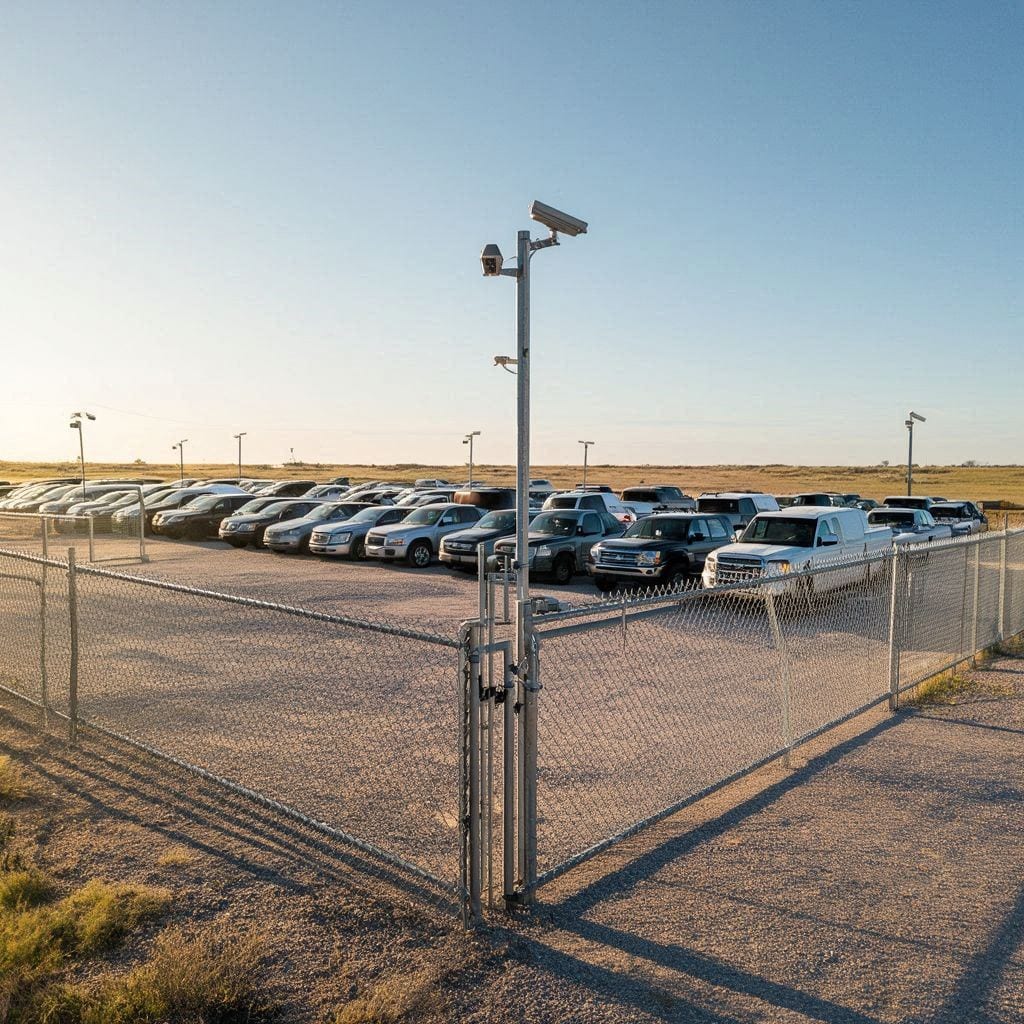
3. Licensed Vehicle Storage Facility (VSF). Where will towed vehicles go? A licensed VSF is required by Texas law for non-consent tows. An unlicensed lot exposes you to liability and makes tenant recovery harder (and more inflammatory).
4. Insurance. General liability, on-hook coverage (for the vehicle being towed), and garage keepers (for the storage lot). Ask to see certificates.
5. Local presence. A tow company based 45 minutes from your property will have slow response times. Look for operators with local shops — in the Crosby/Baytown/Kingwood/Humble area, pick someone actually based there.
6. Documentation policy. Ask: "What do you document on every tow?" A good operator will say: photos in place, photos of signage, tow ticket with timestamps, photo on the flatbed, VSF receipt. All of this protects you during disputes.
What a proper enforcement program looks like
Not just a tow truck on speed dial. A real program:
Step 1 — Property walkthrough. A good operator will walk every lot with you, photograph current signage, identify enforcement zones (resident-only, visitor-only, fire lanes, loading zones), and note any compliance gaps.
Step 2 — Signage audit or install. The Texas Towing and Booting Act (Occupations Code Chapter 2308) requires conspicuous signage at every entrance meeting specific size, visibility, and content rules. If your signs don't meet code, no tow from the property is legally enforceable. A good operator will tell you exactly what to fix.
Step 3 — Written property agreement. Defines what gets towed, from where, under what conditions, who authorizes each tow, and how documentation flows back to you. Standing agreement covers all future tows; individual tow tickets still document each event.
Step 4 — Enforcement rhythm. Some properties want scheduled patrols (e.g., overnight fire-lane checks). Others want on-call response. Most want a hybrid. Your operator should help you pick based on what problems you're actually seeing.
Step 5 — Ongoing documentation and reporting. Tow logs, photos, and storage facility records forwarded to you monthly (or real-time). If a dispute arises, you pull the file and show the paper trail.
If a tow company pitches you without walking the property, verifying signage, or mentioning documentation — they're set up to tow cars and bill, not to run a compliant program.
Property-type differences
Apartment complexes: The sensitive one. Tenants have paid rights to their assigned space. Towing a resident's car from a space they're paying for is wrongful-tow territory. Common enforcement targets: visitor spots being used by non-guests, fire lanes, loading zones during overnight, vehicles without current parking permits.
HOAs and subdivisions: Enforcement usually targets long-term unauthorized parking on common areas (pools, clubhouses, entrance roads). HOAs face extra scrutiny because enforcement decisions are board-authorized — make sure your operator works cleanly with board documentation.
Retail and shopping centers: Usually employee-vehicle enforcement (customer-only lots), overnight abandoned cars, and loading-dock access. Signage and hours matter here — a sign has to say "customer-only during business hours" clearly, or enforcement falls apart.
Office parks: Assigned-spot enforcement, visitor management, sometimes abandoned employee vehicles after terminations. Cleaner environment than apartments or retail, typically lower tow volume.
Industrial facilities: Yard access, refinery/plant gate clearance, unauthorized long-term parking. TWIC credentials matter if you operate inside the Houston Ship Channel fence line — not every tow company has them.
Towing vs booting
Booting (wheel-lock immobilization) is an alternative to towing that leaves the vehicle on-site but immobilized until the owner pays. Pros: less aggressive, reduces tenant backlash, vehicle stays where it is. Cons: requires different permits, Texas law treats it differently, not all operators offer it, and the vehicle still occupies the space it shouldn't.
For most apartments and HOAs, towing is the default enforcement tool. Booting works well for retail parking lots where the violator will return (employees, repeat customers parking over time limit).
Ask your operator which they offer and when they recommend each.
Common property manager mistakes
"Tenants are complaining — just tow the next unauthorized car you see." Authorization still needs to be documented per-tow (or covered by a standing agreement you've signed). Off-the-cuff verbal authorization is how wrongful-tow lawsuits start.
"I'll pick whoever responds fastest." Fast response is good, but a fast unlicensed operator is a ticking lawsuit. Check license and permits first, then optimize for response time.
"We'll figure out signage later." No legal signage = no legal tow. Do signage first, enforcement second.
"Our last tow company was fine until tenants started complaining about them." Get out of the contract. Your reputation and legal exposure are tied to theirs until you switch.
Why Smith Towing
We've been running property-enforcement agreements across Crosby, Baytown, Kingwood, Deer Park, Highlands, Atascocita, Humble, Mont Belvieu, and greater Houston since 2001. What sets our program apart:
- TDLR-licensed. Full chain of documentation on every tow, forwarded to you automatically.
- Our own trucks and crew — flatbeds and heavy wreckers on staff, so we handle everything from a compact in a fire lane to a box truck blocking a loading dock.
- Property walkthroughs before any agreement. We verify signage, photograph current state, and tell you exactly what needs fixing before we start. No shortcuts.
- Standing property agreements with per-tow authorization options — you control how aggressive or passive enforcement is.
- TWIC-certified operators for industrial properties along the Ship Channel.
- Real dispatcher — a person answers every call, not a national call center. Real relationships with property managers we've worked with for 20+ years.
No monthly fee, no contract term. Just a compliant agreement that's ready when you need it.
Call (832) 360-7122 to set up a walkthrough. See also: private property towing service details, vehicle storage facility, abandoned vehicle removal guide.
FREQUENTLY ASKED QUESTIONS
RELATED GUIDES
NEED HELP RIGHT NOW?
Our dispatcher picks up personally. No voicemail, no queue.