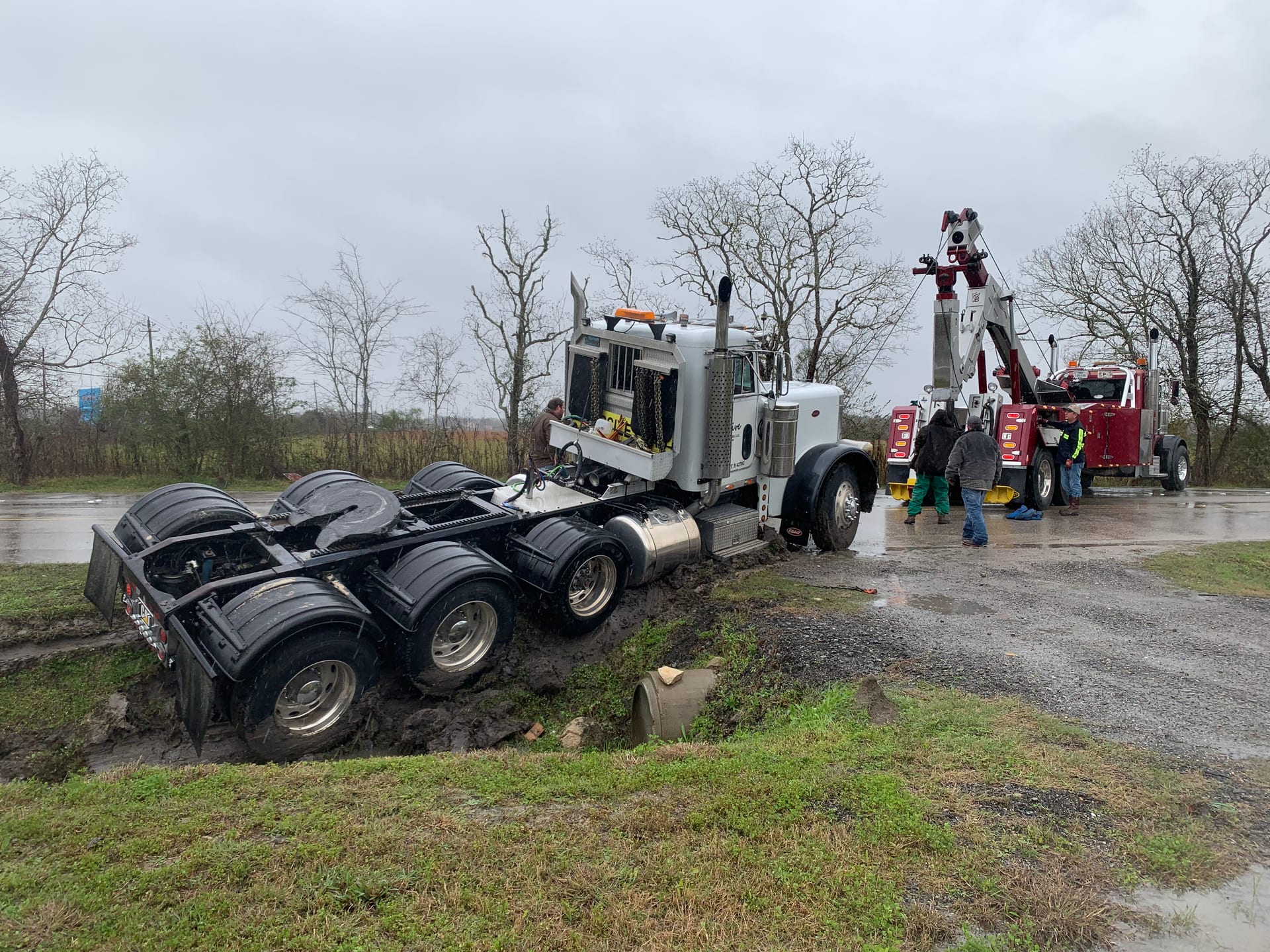
A semi blows a steer tire on I-10 east during rush hour. A loaded tanker rolls near the Ship Channel. An 18-wheeler jackknifes on 610 west at the 290 interchange. When it's your equipment and your driver, every minute the truck sits is revenue loss, mounting citations, and escalating traffic chaos.
This guide is for fleet managers, dispatchers, and owner-operators who need to know what heavy-duty recovery in Houston actually looks like, and how to pick the right partner before you need one at 2 a.m.
On This Page
What counts as heavy-duty
The standard truck weight classes (federal GVWR classes, the same ones FMCSA uses) roughly map to:
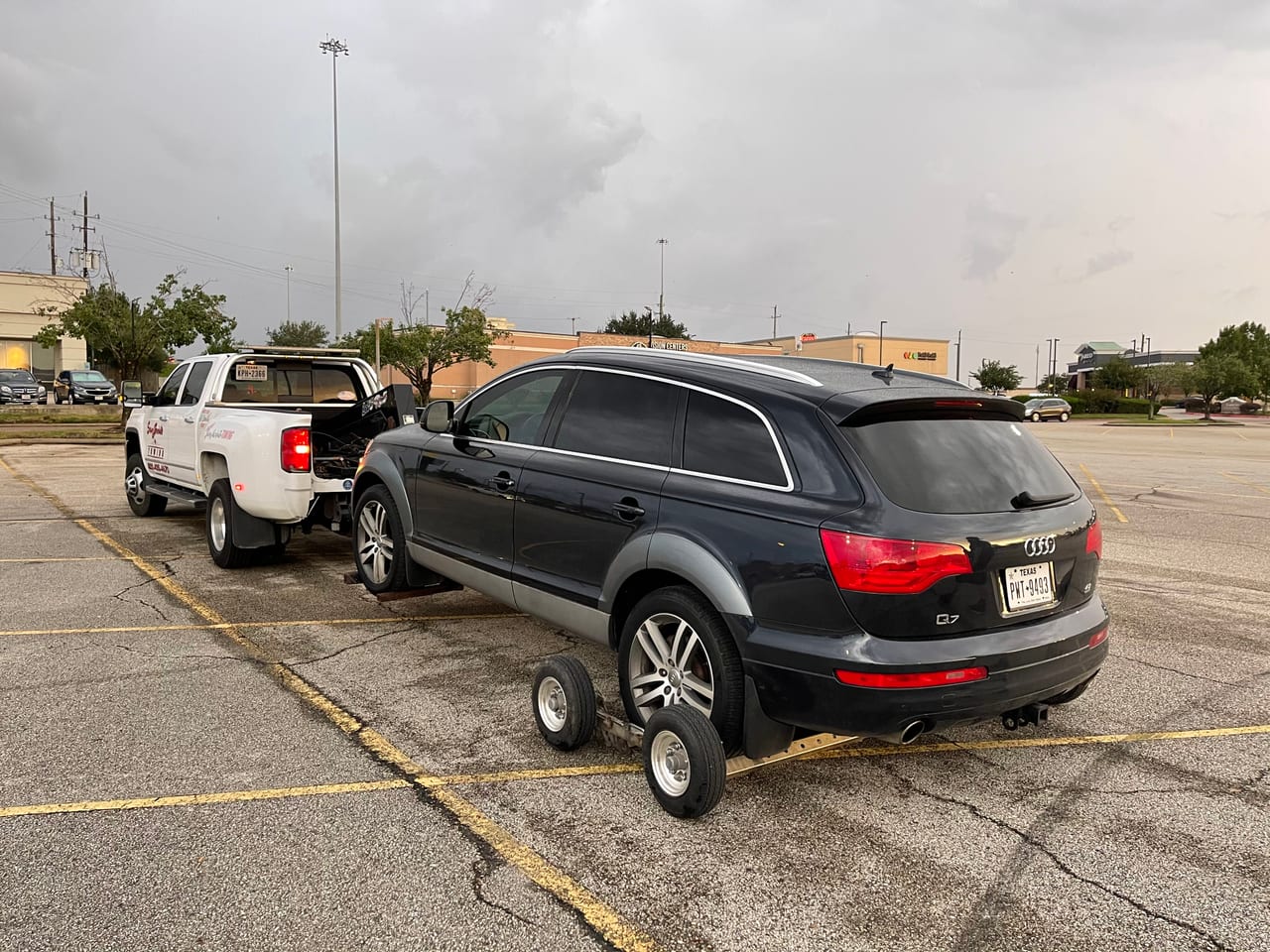
- Light-duty: under 10,000 lbs GVWR — passenger cars, SUVs, pickups, small box trucks
- Medium-duty: 10,001-26,000 lbs — dually pickups, larger box trucks, commercial vans, roll-offs
- Heavy-duty: 26,001+ lbs — semi tractors, Class 8 trucks, buses, RVs, tanker trucks, loaded trailers
A light or medium truck can't legally (or safely) tow a Class 8 tractor. If you're unsure what class your vehicle is, tell your dispatcher the make, model, and whether it's loaded — a good operator will size the right truck before dispatch.
When to call heavy-duty vs medium
Common mistake: dispatching a medium-duty wrecker for a breakdown that actually needs heavy. This wastes 30-60 minutes and often leads to a second callout. Call heavy when:
- The vehicle's GVWR is over 26,001 lbs (any loaded semi qualifies)
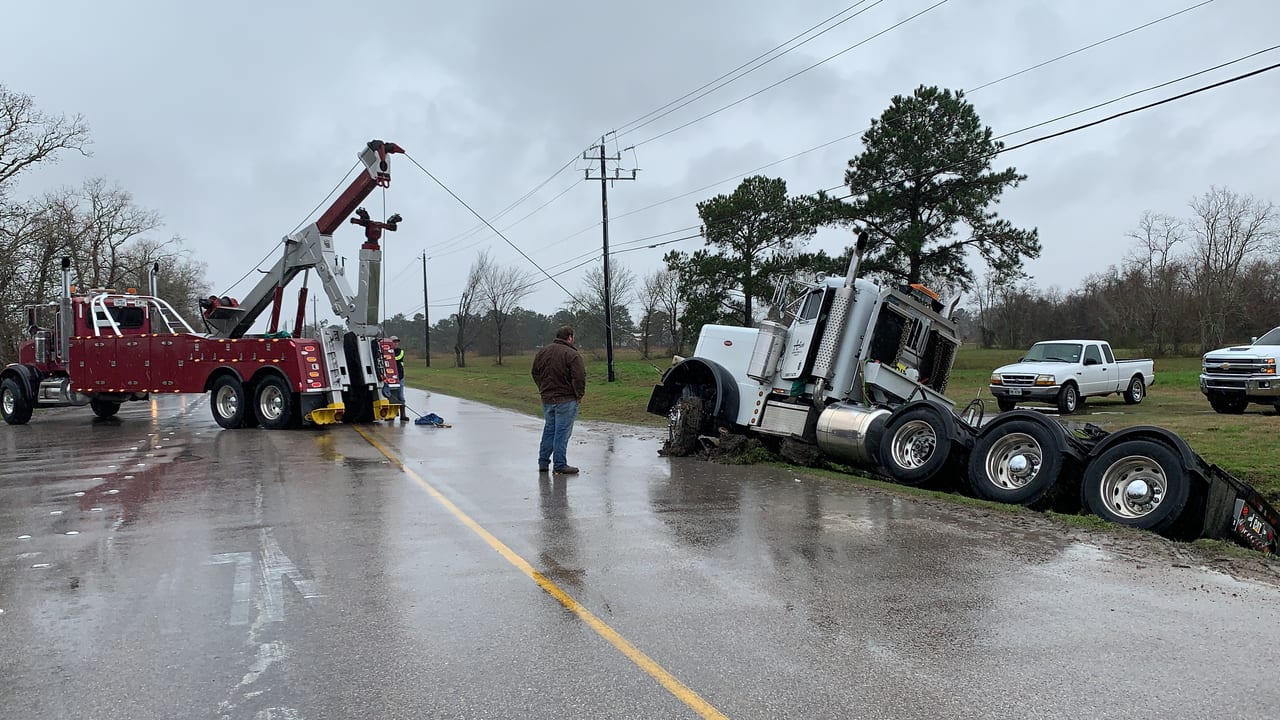
- The truck is off the roadway (rotator winching needed)
- The truck is overturned, on its side, or rolled
- The load has shifted or spilled
- Multiple axles need to be lifted simultaneously
- You're on a freeway and need fast-clearance capability
When in doubt, describe the situation to dispatch — they'll send the right truck the first time.
Houston-specific recovery realities
I-10 East corridor (Crosby to Beaumont): High-volume truck route. Accidents between the 610 interchange and the Baytown exit are routine. The region's free Tow and Go program (run by H-GAC) covers stalled light vehicles on parts of this corridor, moving them to a safe spot at the nearest exit — it won't recover a heavy truck, doesn't work crash scenes, and doesn't handle the actual tow to a shop.
I-45 and 610 South Loop: Dense traffic, tight shoulders, lots of overhead bridges. Rotator work here requires traffic control coordination with HPD.
US-59 / I-69 (Kingwood to Downtown): Frequent commercial breakdowns. Long shoulders make response easier but rear-end collision risk is high on the merge into 610.
SH-225 / SH-146 (Ship Channel corridor): Industrial traffic including tankers and chemical loads. Plant gate access usually requires TWIC credentials. Many incidents happen inside facility fences — not every tow company can legally enter.
Beltway 8 and 290: Overpasses, toll roads, and commercial truck traffic. Sometimes HCTRA tolls complicate routing — your operator should factor this into the response plan.
US-90 (Dayton, Liberty, Chambers County): Rural heavy-truck runs with longer response windows. Farm roads off the highway may need off-pavement capability.
Types of heavy-duty recovery jobs
Straight tow: Truck broken down, all wheels on the ground, just needs to roll to the shop. Most common. Single heavy-wrecker handles it.
Jackknife recovery: Tractor and trailer folded against each other. Often requires rotator to unhook, reposition, and reattach without damage. Can take 1-3 hours depending on angle and load.
Rollover / overturn: Vehicle is on its side or fully inverted. Requires rotator with rigging experience. Sometimes airbags or cranes are needed. Load transfer may be necessary before uprighting. Expect 2-6 hours on complex jobs.
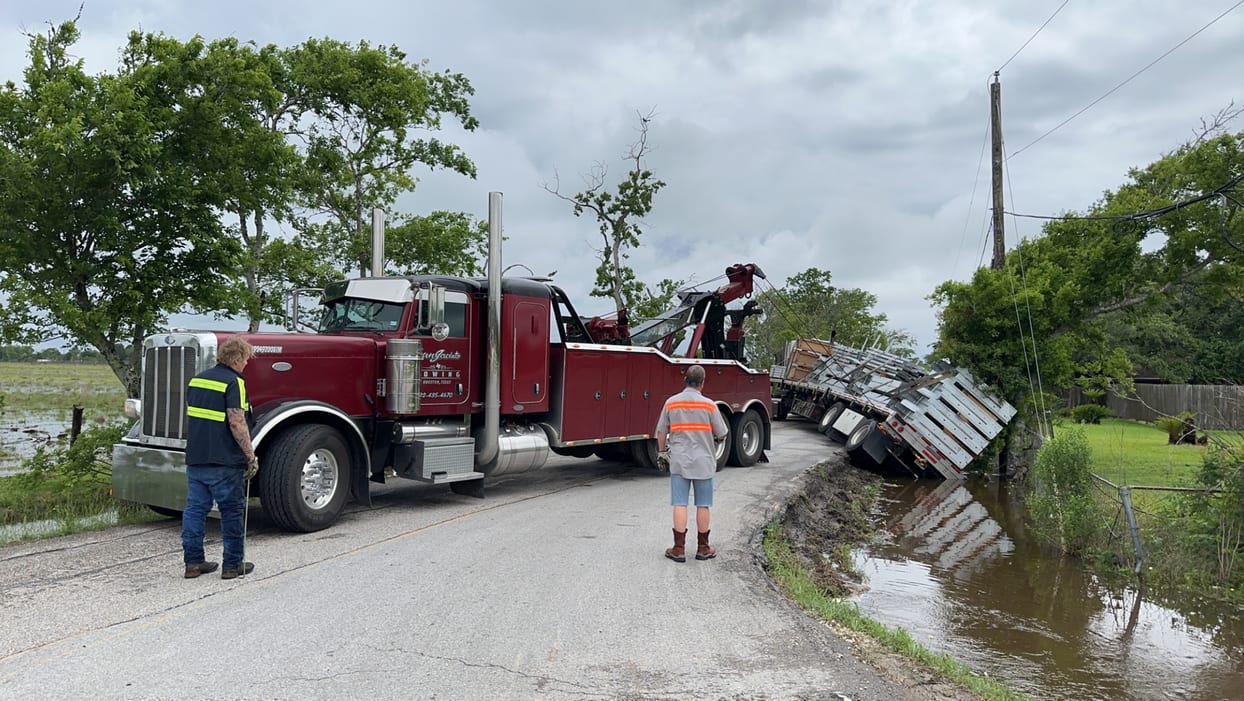
Off-pavement recovery: Truck in a ditch, mud, or runoff. Winch-out with proper anchoring and ground protection. Ground conditions dictate cost more than distance.
Load shift or spill: Cargo moved during transit, making the truck unstable or unsafe. Stabilize the load first, transfer if needed, then tow.
Plant / refinery gate recovery: Inside a TWIC-gated facility. Requires certified operators. Often involves narrower lanes and specialized equipment access.
Long-haul transport: Moving a non-runner truck or trailer across county lines, usually to a repair facility or dealer. Needs heavy lowboy or equipment trailer, not a standard wrecker.
What to ask before you sign a fleet agreement
1. What's the exact heavy-duty equipment fleet? Get the specifics — "rotator" is vague. Ask the rotator's rated capacity (35-ton? 50? 75?), how many heavy units they run, and the model year. Real operators tell you the truck, capacity, and year without hesitation.
2. Where are the trucks based? A tow company "serving Houston" from a shop 90 miles out will never respond fast to an I-10 breakdown. Look for shops in or near the corridors you actually operate on.
3. What's average response time for your fleet customers? Benchmark against 30-60 minutes on-freeway in metro Houston during daytime. Longer = either bad equipment coverage or bad dispatch.
4. Net-30 invoicing or per-tow cards? Running a fleet on per-tow credit card charges is an operational headache. Net-30 with clean invoicing matched to your POs is standard for any operator who works with fleets regularly.
5. On-site repair capability? If your truck ends up at their storage facility non-running, can they repair it or does it need a second tow to another shop? Single-facility shops save days and costs.
6. TWIC-certified operators? Required if any of your routes touch the Ship Channel. Non-negotiable for industrial fleet work.
7. License current? TDLR license — ask to see it. Legitimate operators show you on first request.
8. Insurance limits? General liability, on-hook coverage for the vehicle, garage keepers for storage. Ask for certificates. Your insurer may require specific coverage limits on any recovery company that touches your equipment.
Cost ranges (Houston area, 2026)
Rough ballpark — actual quotes depend on distance, complexity, and hook-up:
- Straight heavy-duty tow (semi, local): $600-1,500
- Jackknife recovery: $1,200-3,000
- Rollover / rotator recovery: $1,500-5,000+
- Winch-out from ditch: $800-2,500 depending on ground conditions
- Load transfer: +$500-1,500 for additional trailer plus labor
- Long-haul transport (100+ miles): typically per-mile + hookup
Beware operators who quote vague ranges like "$500-5,000 depending" with no narrowing questions. A reputable operator will ask about weight, load, location, and condition before giving you a real number.
Why Smith Towing for heavy-duty
We run heavy-duty recovery out of our Crosby shop — a direct I-10 east run to most of Houston's industrial and highway corridors. Specifically:
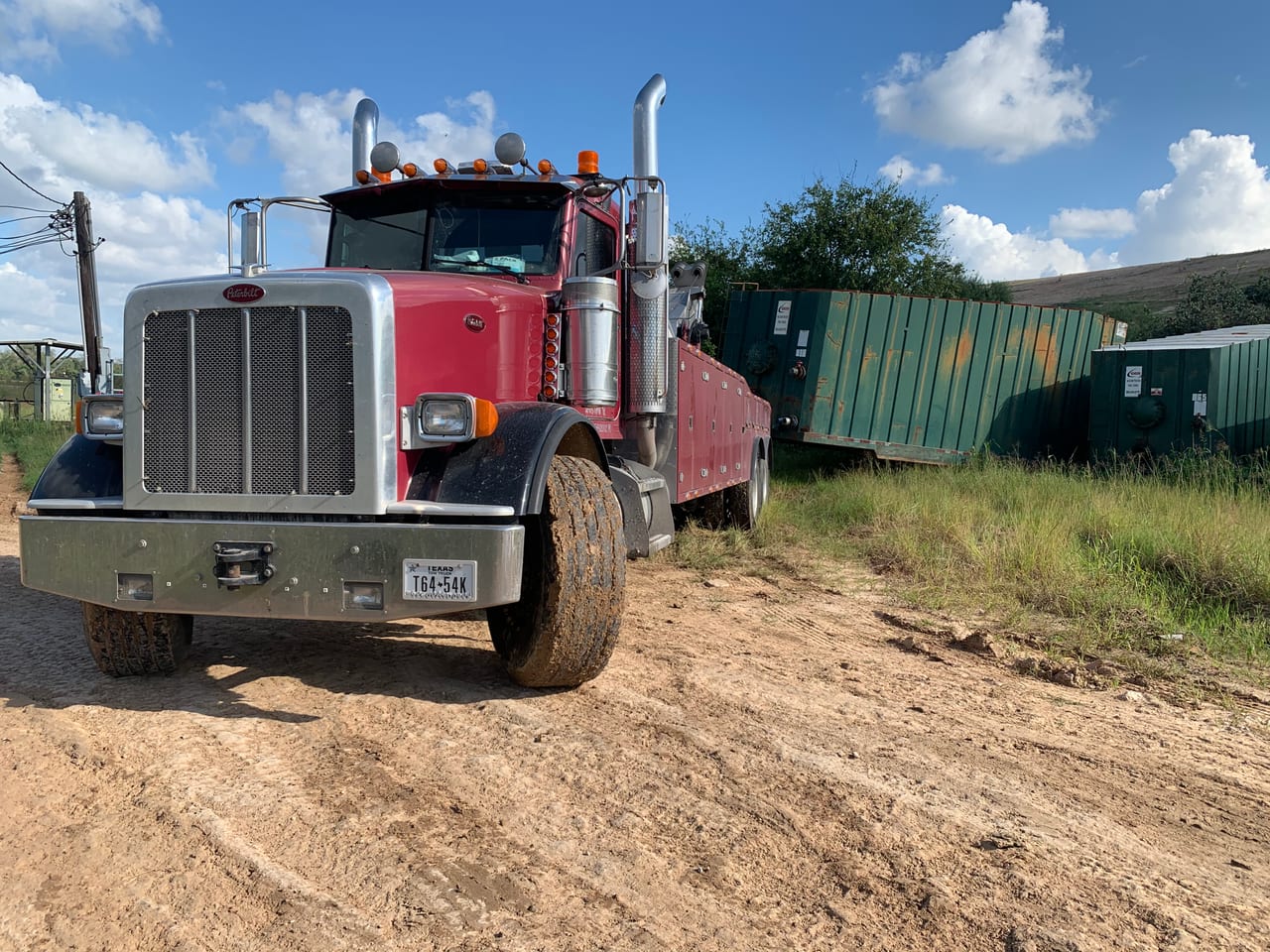
- 50- and 75-ton rotators + a 35-ton heavy wrecker — rated to recover fully loaded tractor-trailers (up to 80,000 lb). Rollovers, jackknifes, tight-space work.
- Medium and heavy wreckers for routine tractor-trailer tows
- Flatbeds, an NRC carrier, and equipment trailers — hauling dozers, forklifts, shipping containers, and non-running trucks on long hauls
- TWIC-certified operators for Ship Channel, refinery, and plant work
- On-site diesel repair shop with overhead crane — same facility handles tow, storage, and repair
- Net-30 fleet accounts with PO-matched invoicing
- TDLR-licensed — full documentation on every job
We've been handling heavy-duty work for Houston-area fleets, owner-operators, and industrial customers since 2001. Most of our heavy work is repeat business from trucking companies, pipeline contractors, drilling crews, and plant operators who've called us at 3 a.m. enough times to know we answer.
If your fleet runs through Houston and you don't have a heavy-duty tow partner on file, set one up before your next breakdown. Call (832) 360-7122 to open a fleet account or schedule an equipment walkthrough.
See also: heavy duty towing service, semi truck towing, industrial plant services, semi truck repair. We run heavy recovery across the Ship Channel corridor — Channelview, Baytown, Deer Park, and Pasadena.
FREQUENTLY ASKED QUESTIONS
RELATED GUIDES
NEED HELP RIGHT NOW?
Our dispatcher picks up personally. No voicemail, no queue.