INDUSTRIAL & PLANT SERVICES
TWIC-certified operators cleared for the Houston Ship Channel, refineries, and chemical plants.
PRE-CLEARED FOR THE GULF COAST’S SECURE SITES
The Houston Ship Channel, its refineries, and the surrounding chemical plants run on tight safety and security rules. To even drive through the gate, operators need current TWIC credentials. We maintain full TWIC certification on our heavy-duty team, which means when you need a recovery or transfer inside a secure industrial facility, we’re already cleared.
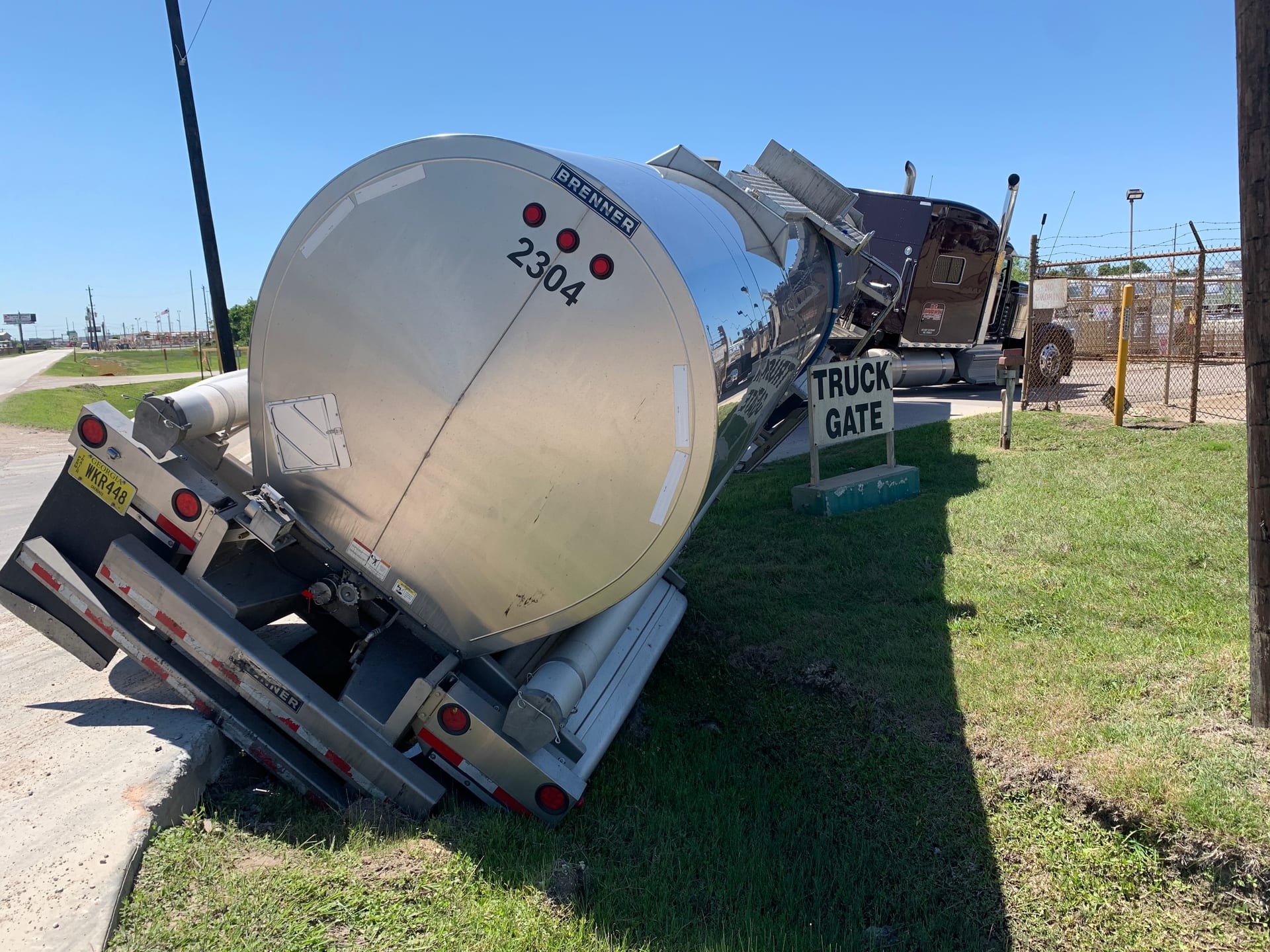
From tanker recovery at plant gates to heavy equipment moves inside the fence line, we’ve done this work for plant safety officers and site supervisors across the greater Port area.
Rigging plans, lift permits, and after-action paperwork included as part of the job.
INDUSTRIAL CAPABILITIES
- TWIC-certified operators
- Houston Ship Channel clearance
- Refinery & chemical plant work
- Port of Houston terminals
- Tanker recovery & transfer
- Heavy equipment moves inside secure facilities
- Crane load transfers on-site
- Plant-approved insurance & paperwork
TWIC GATE ACCESS & SECURE-SITE CLEARANCE
Refineries, chemical plants, and marine terminals along the Houston Ship Channel won’t let an uncredentialed wrecker past the guard shack. Our heavy-duty operators carry current TWIC (Transportation Worker Identification Credential) cards, so when your safety officer or gate supervisor calls, the truck that shows up can actually clear the gate and get to the unit. No waiting on an escort because the driver lacks credentials, no turning a recovery into a two-day permitting exercise. We’ve been running Gulf Coast industrial work since 2001, and gate access is the first thing that separates a plant-ready operator from a guy with a tow truck.
TANKER RECOVERY AT PLANT GATES & LOADING RACKS
A loaded tanker that jackknifes at a plant entrance, drops a trailer axle off the apron, or stalls at the loading rack is a problem you want cleared by someone who understands both the weight and the hazard. We recover and reposition tankers at refinery gates and inside the fence with our 35-ton heavy wrecker and 50- and 75-ton rotators, matching the rigging to the trailer’s condition and whatever it’s carrying. When product is involved, we coordinate with your site emergency response and environmental team and stage the recovery so it doesn’t compound the incident.
IN-FENCE HEAVY MOVES & EQUIPMENT RELOCATION
Plenty of industrial recovery never touches a public road. Process skids, generators, transformers, conex boxes, dead forklifts, and stranded heavy equipment all need to move inside the facility: from a laydown yard to a unit, off a turnaround pad, or out to a gate for transport. We bring the wrecker and the rigging into the fence line and relocate heavy loads across the site under your permit-to-work and safe-work-permit system, working to the plant’s pace and its rules rather than ours.
ON-SITE CRANE LOAD TRANSFERS
When a trailer can no longer carry its load — a shifted skid, a dropped axle, a wrecked unit — the cargo has to come off and go onto a sound trailer before anything leaves. We perform crane and boom load transfers on-site so the load moves once, cleanly, instead of being dragged or double-handled. With a 50-ton rotator on scene we have the reach and the capacity for the heavy single-piece lifts that smaller operators have to subcontract, which keeps the job under one crew and one COI.
RIGGING PLANS & LIFT PERMITS
Inside a plant, the lift plan matters as much as the lift. Before we pick or pull anything heavy we work out the rigging — pick points, sling angles, capacity margins, ground bearing, and exclusion zone — and put it in writing so it can go through your permit process. Our operators are used to JSAs, critical-lift reviews, and signing onto a permit-to-work before the boom comes up. That documentation is part of the job, not an upcharge, and it’s what lets a contractor recovery actually start on schedule.
INSURANCE & CERTIFICATE-OF-INSURANCE (COI) DOCS
No major operator lets an uninsured truck onto the property, and gate security will ask for paperwork before the recovery starts. We carry the commercial coverage that industrial sites expect and issue certificates of insurance naming your facility or contractor as additional insured, sent ahead so it’s on file before we roll. Combined with TWIC credentials and a written lift plan, that’s the full compliance package a plant needs to clear an outside wrecker through the gate without delay.
SHIP CHANNEL, SH-225 & PORT TERMINAL CORRIDORS
Our coverage tracks the industrial spine of the region: the Houston Ship Channel, the SH-225 (La Porte Freeway) plant corridor through Pasadena, Deer Park, and La Porte, the Battleground Road and Independence Parkway plant belts, and the container and bulk terminals at the Port of Houston. These are the corridors of refineries, chemical plants, and marine terminals we run heavy recovery through, and our Crosby base sits right on the north side of it. We reference the corridor generally because every plant on it has the same access, safety, and documentation expectations, and we’re built to meet them.
B2B DISPATCH FOR FLEET & SAFETY OFFICERS
Industrial calls don’t come from a stranded motorist. They come from a plant safety officer, a terminal operations manager, or a fleet dispatcher who needs the situation handled and documented. When you call, a real dispatcher answers 24/7/365, not a call center, and routes the heavy wrecker with a straight ETA. We run Net-30 fleet and commercial accounts, so recurring industrial work doesn’t stall on a credit card at the gate. Everything runs out of our own 4-acre secured Crosby facility — 4338 Harvey Rd — with an enclosed shop and overhead crane behind it.
SERVING CROSBY & GREATER HOUSTON
We provide this service 24/7 across Crosby and the greater Houston area, including:
Crosby • Highlands • Channelview • Baytown • Mont Belvieu • La Porte • Deer Park • Pasadena • Huffman • Humble • Atascocita • Kingwood • Dayton • Liberty • Cleveland
RELATED SERVICES
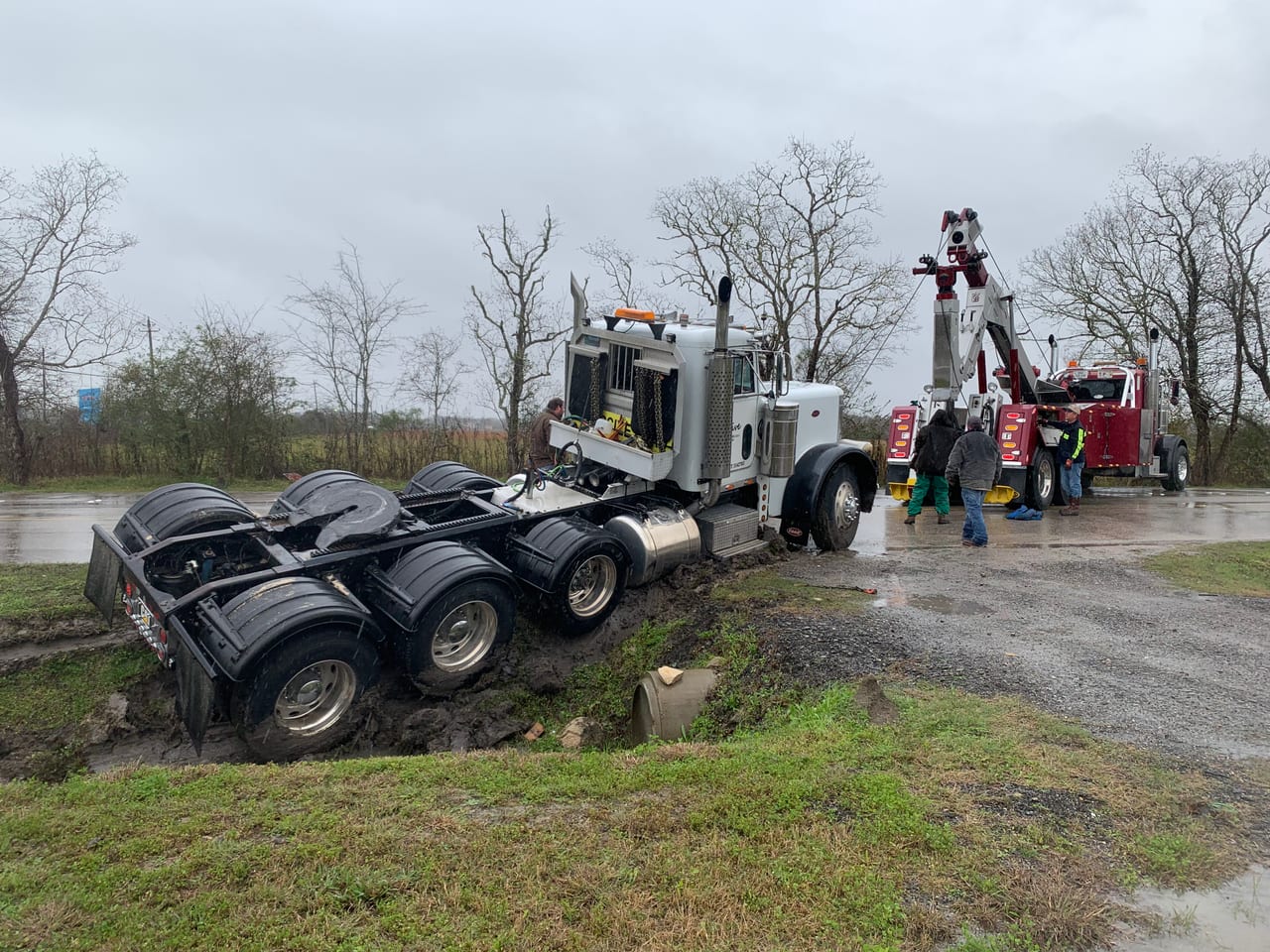
Heavy Duty Towing
Full-rotator recovery up to 80,000 lbs.
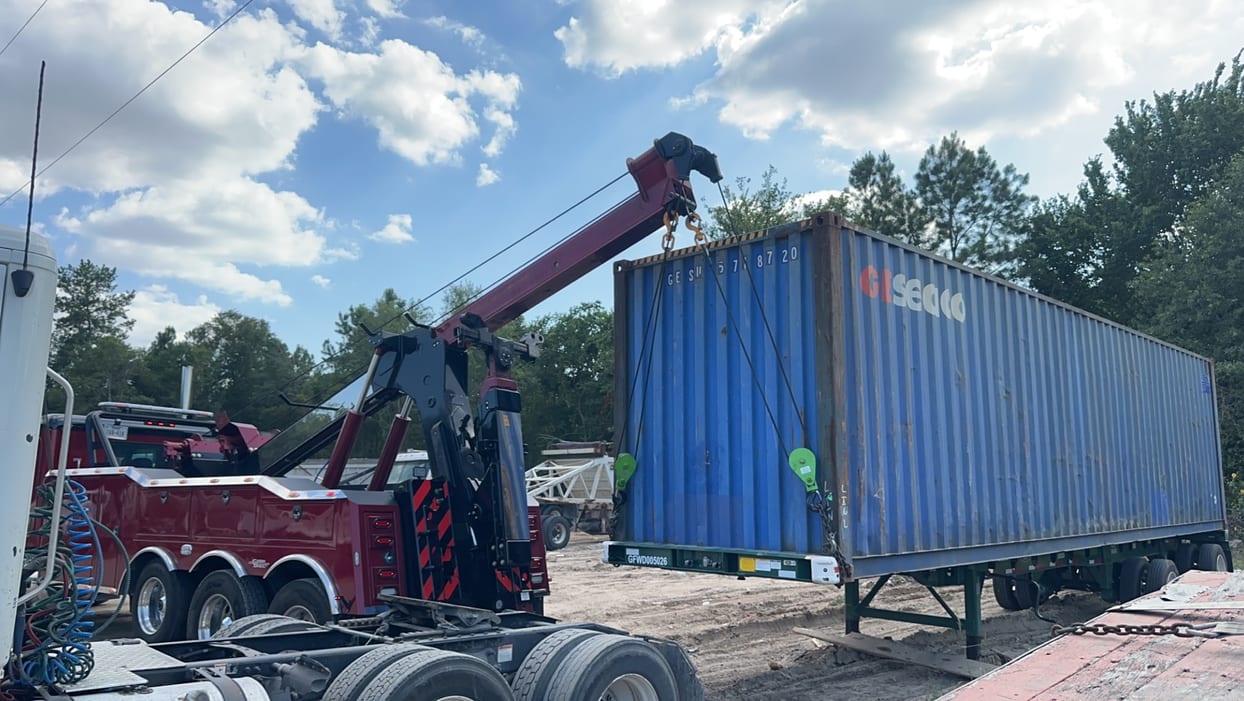
Crane Load Transfers
On-site heavy lifts.
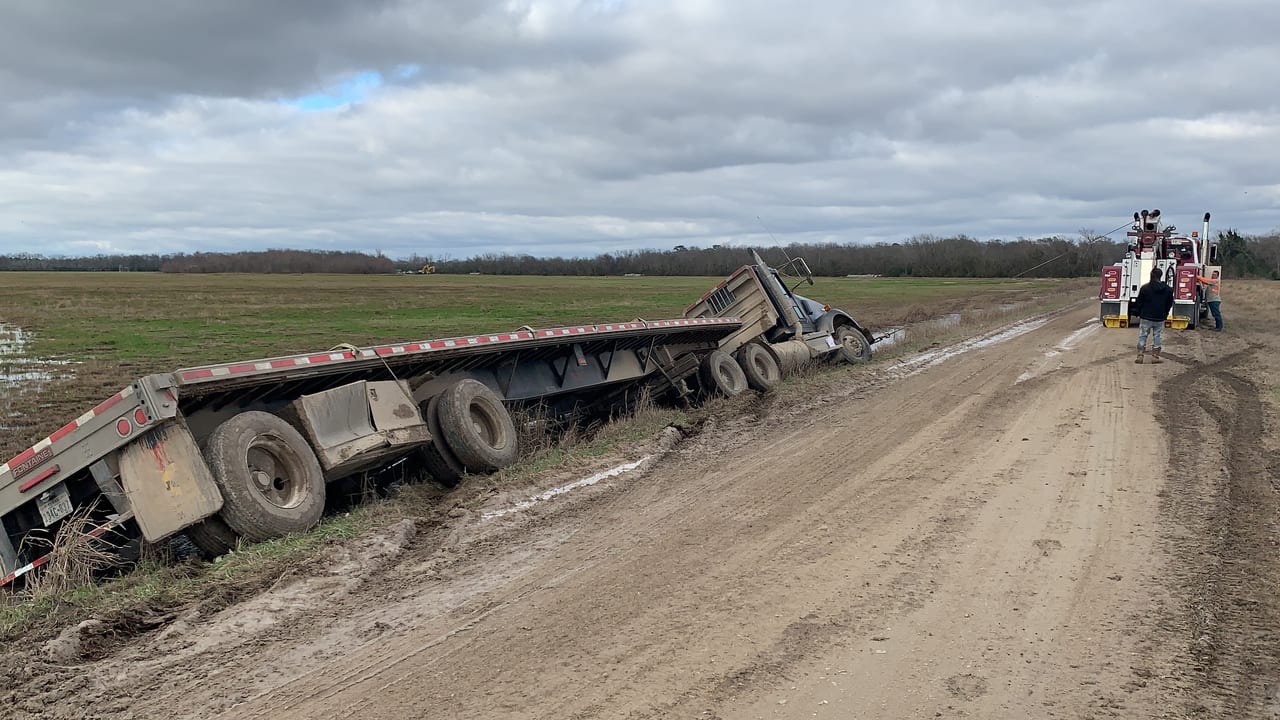
Recovery & Winch-Out
Any terrain, any weather.
Not what you need? See the full list of what we handle — towing, recovery, repair, storage and roadside, 24/7.
FREQUENTLY ASKED QUESTIONS
NEED HELP RIGHT NOW?
Our dispatcher picks up personally: no voicemail, no queue.