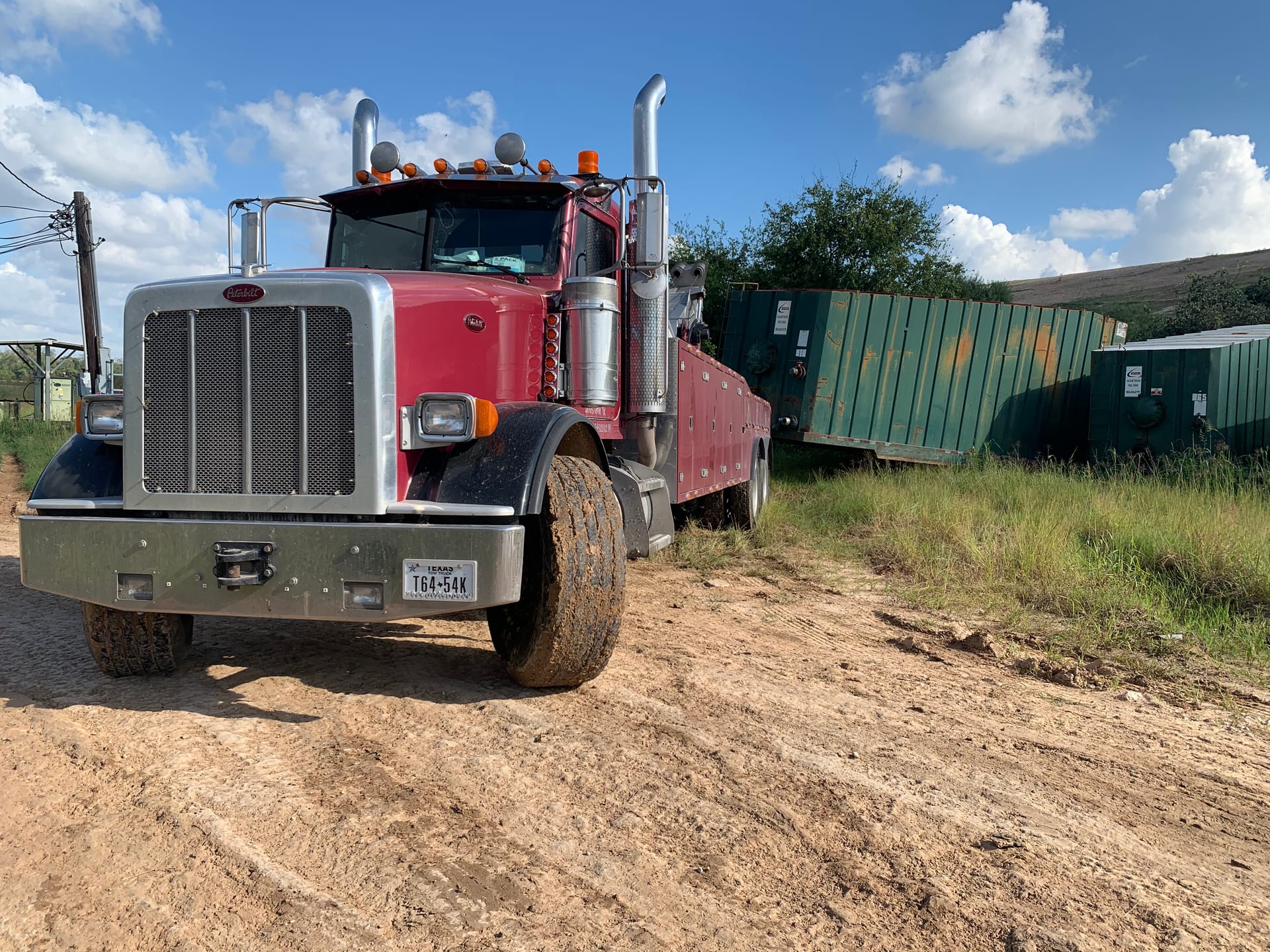
If you manage a fleet that operates inside the Port of Houston, a Ship Channel refinery, or a chemical plant along Highway 225, you already know the gate rules: no TWIC credential, no unescorted access to the secure side of the fence.
That means when a tractor breaks down at the gate, a tanker jackknifes on a process road, or a piece of mobile equipment drops a load inside the fence line, most standard tow companies can't help you — their operators aren't cleared to pass the security checkpoint.
At Smith Towing, our heavy-duty operators are fully TWIC certified, which changes the math.
On This Page
What TWIC actually is
TWIC stands for Transportation Worker Identification Credential. It's a federal security clearance issued by the Transportation Security Administration (TSA), authorized under the Maritime Transportation Security Act of 2002 and the SAFE Port Act of 2006. The credential allows individual workers unescorted access to the secure areas of maritime and industrial facilities regulated under those laws.
To get TWIC, every operator goes through:
- FBI fingerprint-based criminal background check
- Immigration status verification — part of the TSA Security Threat Assessment
- Federal biometric screening — fingerprints + photo + signature
- In-person enrollment at a TSA-designated enrollment center (operated by IDEMIA / Universal Enroll)
- TSA Security Threat Assessment — checks federal terrorism and criminal databases
The credential is renewed every 5 years. Losing it once (over a paperwork lapse, a name change without updated documentation, or a renewal missed by even a few weeks) typically takes 4–8 weeks to restore.
That's why a lot of tow companies don't carry TWIC across their workforce — the administrative overhead doesn't justify it unless industrial work is a real part of the book of business. For a tow operator that primarily serves consumer breakdowns and minor accidents, TWIC is overhead with no return.
For a Ship Channel-area operator like Smith Towing, TWIC is non-negotiable. We invest in it for every heavy-duty operator on staff because half our heavy work happens inside fence lines.
Where TWIC matters along the Gulf Coast
Effectively every major industrial site between Houston and Galveston requires TWIC for contractor access:
Port of Houston Authority terminals:
- Bayport Container Terminal (Pasadena/La Porte)
- Barbours Cut Terminal (La Porte)
- Care Terminal
- Woodhouse Terminal
- Public terminals along the Ship Channel
Houston-area & Gulf Coast refineries:
- ExxonMobil Baytown Refinery & Olefins Plant
- Deer Park complex (Pemex refinery / Shell chemicals)
- LyondellBasell Channelview Complex
- Marathon Galveston Bay (Texas City)
- Valero Houston Refinery
- Phillips 66 Sweeny Refinery
- Chevron Pasadena
- TotalEnergies Port Arthur
Chemical complexes along Highway 225, Highway 146, and SH 99 from Pasadena through Mont Belvieu and out to Anahuac.
Private marine terminals — Vopak, Kinder Morgan, Magellan, Enterprise Products, Targa Resources operations.
Coast Guard–regulated (MTSA) port terminals along the channel, where the TSA-issued TWIC is the baseline requirement — some sites layer additional access controls on top of it.
If your facility is in this footprint and you need recovery work performed inside the fence, you need an operator that's already cleared to enter.
What TWIC certification lets us do that others can't
With TWIC credentials and the heavy-duty equipment to back them, we can:
- Enter the gate of any TWIC-regulated facility in the Gulf Coast region without escort delays.
- Recover equipment INSIDE the facility — process roads, tank farms, container yards, dock aprons — not just at the perimeter.
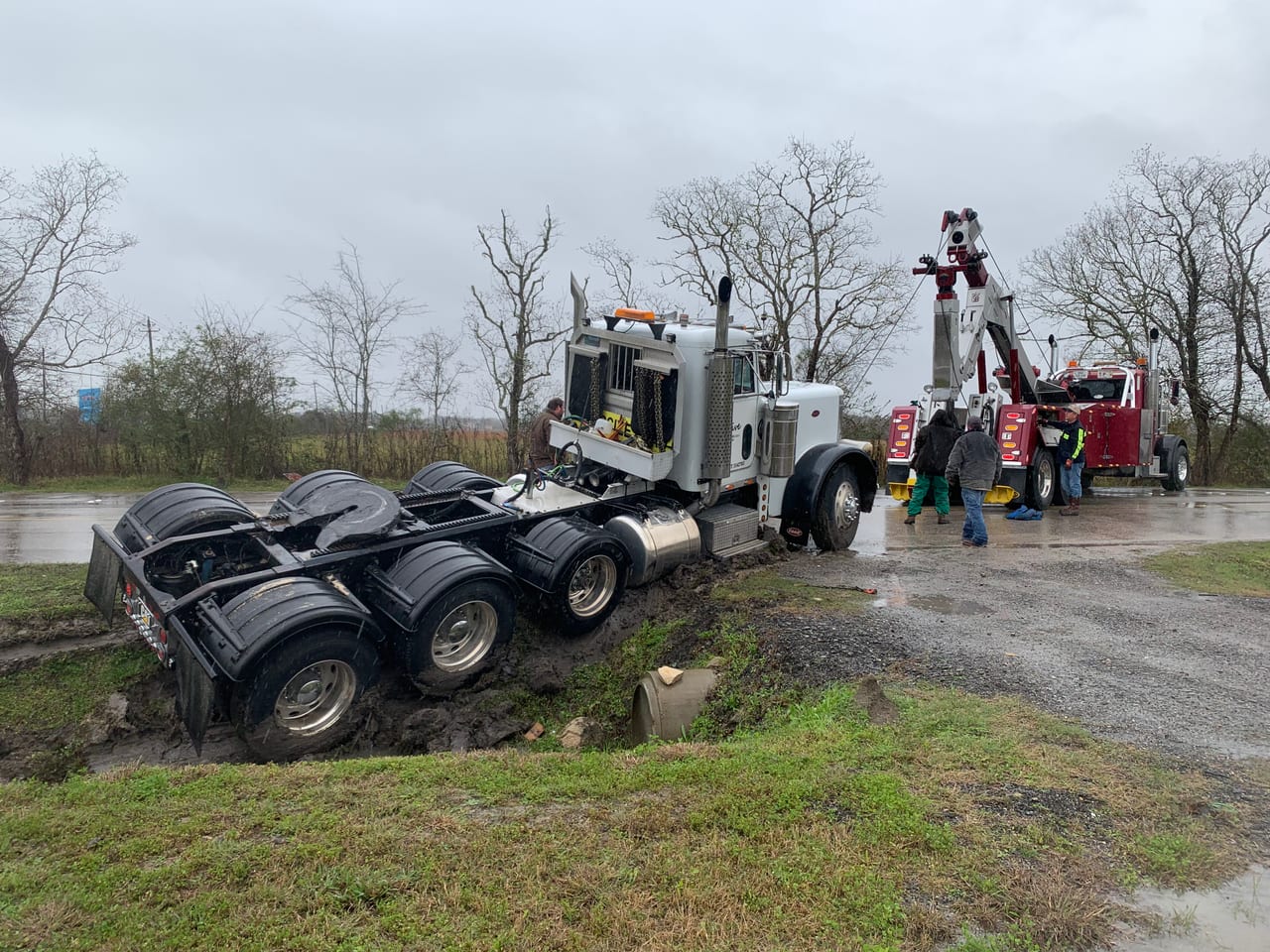
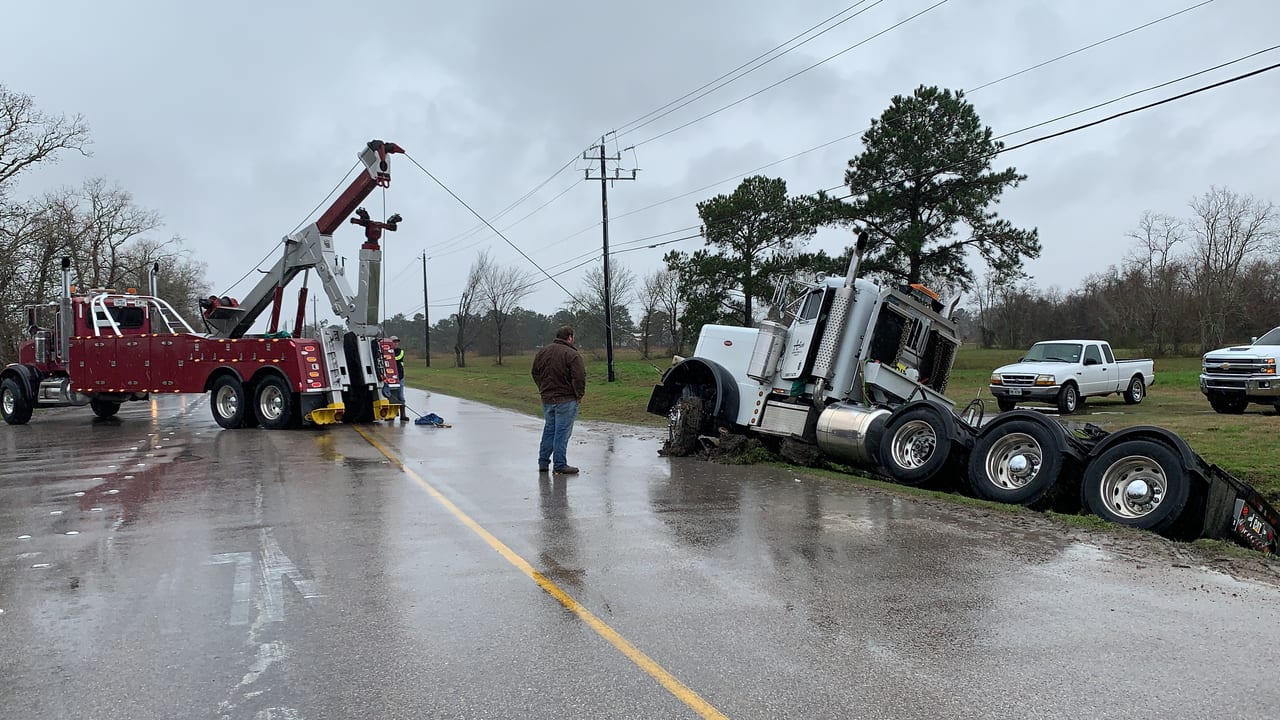
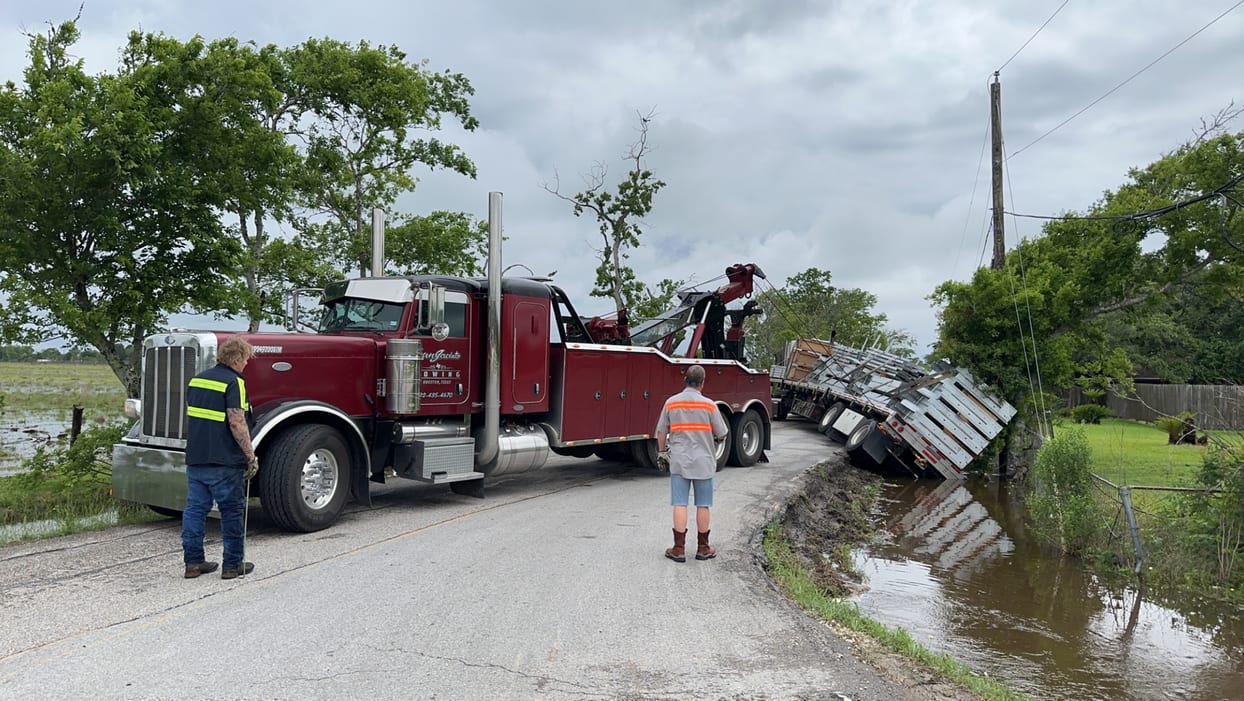
- Perform load transfers on site using our 75-ton rotator, including rolled trailers, jackknifed tankers, and dropped loads from mobile cranes.
- Coordinate with plant safety officers in real time on the recovery plan, including hot-work clearances, lockout-tagout requirements, and exclusion zone setup.
- Provide post-action paperwork that satisfies facility compliance audits — operator credentials, insurance certs, safety briefing record, photos, gate log, incident summary.
- Stage equipment for pre-planned operations — turnaround season equipment moves, scheduled crane positioning, on-site rigging support during planned outages.
What this means for Houston fleet managers and plant safety officers
When you're a plant safety officer with a 53-foot tractor blocking a process road during a turnaround, or a fleet manager with a 40-ton chassis that lost its trans on the way to a terminal, you want one phone call that starts the entire recovery process.
That call has to reach an operator who's already cleared, already dispatched the right equipment, and already knows the protocols at your facility. Otherwise you're burning hours on escort approvals while production sits down.
That's what TWIC certification buys: it removes the credentialing delay so the recovery clock starts when you call, not when the gate opens.
How we work with plant accounts
Pre-arranged plant accounts get faster response and pre-negotiated pricing. The setup process:
- Initial site visit — our heavy-duty supervisor walks the facility with your safety officer, identifies access points, common breakdown locations, and equipment staging areas.
- Credentials filed with facility security — operator TWIC numbers, vehicle DOT info, insurance certificates pre-loaded into your contractor management system.
- Pre-job safety briefing template approved by your HSE team — covers PPE, exclusion zones, hot-work permits, communication protocols.
- Dedicated dispatch line for plant emergencies — bypasses the public dispatch queue for fastest response.
- Standing rate sheet for routine scenarios (tractor recovery, trailer hookup, load transfer) plus T&M rates for non-standard work.
- Quarterly account review — incident summaries, response time metrics, opportunities to improve.
Setup typically takes 2–4 weeks depending on facility approval timelines. Once active, response time on dispatched calls drops to gate-to-asset within 30 minutes for the immediate Ship Channel cluster.
Equipment we run for industrial recoveries
Heavy-duty industrial work needs specific equipment. What we deploy:
- 50-ton and 75-ton rotators — primary recovery units for tractors, tankers, and overturned trailers. Articulating booms, multiple winches, capable of single-truck recovery for most scenarios.
- 35-ton heavy wrecker + NRC carrier — for tractor and chassis tows, rotator-operation support, and hauling dozers, forklifts, shipping containers, and heavy equipment.
- Tri-axle flatbeds — for transport of equipment that's been recovered but isn't drivable.
- Air cushion recovery system — for tipped tankers and trailers where rotation risk exists. Stabilizes the vehicle without compounding cargo shift.
- Hydraulic spreaders and cribbing — for tight-quarters work in narrow process roads or refinery alleys.
- Lighting and safety perimeter equipment — cones, light towers, traffic-direction support for night and zero-visibility operations.
All equipment carries the insurance and certifications that pass facility audit: general liability, garage keepers, on-hook, automobile liability, and pollution liability where required.
Equipment we DON'T run (and what we coordinate)
We're a recovery operator, not a hazmat or environmental contractor. For these we coordinate with the facility's existing vendors:
- Hazmat spill response — facilities typically work with HEPACO, Clean Harbors, US Ecology, or their corporate-approved spill responder.
- Chemical decontamination — same network.
- Crane services beyond our 75-ton rotator capacity — Bigge, ALL Crane, Maxim, Coastline, Mammoet for the heavy-lift work.
- Salvage operations — vehicle salvage for total losses goes to facility-approved auction yards.
- Environmental cleanup — we recover the asset; cleanup of any contaminated soil, water, or surfaces is a separate scope.
We work alongside these contractors. On a multi-vendor recovery, our role is the asset extraction; theirs is everything else.
Response time expectations
For Ship Channel-cluster facilities (Baytown, Pasadena, Deer Park, La Porte, Channelview, Mont Belvieu): typical dispatch-to-gate is 15–30 minutes; gate-to-asset adds 5–20 depending on facility size and traffic.
For more distant facilities (Texas City, Galveston, Sweeny, Beaumont/Port Arthur with prior arrangement): 45–90 minutes dispatch-to-gate.
For pre-arranged plant accounts: priority routing reduces response time by 10–25% on average compared to public dispatch.
For after-hours, weekends, holidays: same dispatch availability — Smith Towing runs 24/7/365 with on-call heavy-duty operators ready for industrial calls.
Common scenarios we handle
Tractor breakdown at the gate. Operator can't pull through the security checkpoint; production driver waiting on assets. We arrive, hookup, tow to the carrier's preferred shop or our Crosby facility.
Jackknifed tanker on a process road. Cargo intact but vehicle blocking access. We assess cargo stability, set perimeter, and recover with the rotator. If cargo shift creates exposure risk, we coordinate with the plant's spill responder before lifting.
Mobile crane drops a load during a turnaround. Heavy lift required to clear the process area. Our rotator handles it, or we coordinate with a primary heavy-lift contractor while we run the load transfer.
Yard incident — vehicle vs. structure. Forklift hit a rack, container truck hit a guard rail, tractor backed into a piping run. We extract the vehicle without further damage, coordinate with facility maintenance for the structural repair.
Turn-around season equipment moves. Pre-planned recovery support during scheduled plant outages — high volume of equipment moving in and out, our equipment pre-staged for the duration.
Vehicle abandonment / criminal incident. Vehicle left inside fence with no responsible party. We coordinate with facility security and law enforcement for lawful removal.
Why this matters for the Houston economy
The Houston Ship Channel and surrounding industrial cluster is the largest petrochemical complex in the U.S. and one of the largest in the world. Production downtime — even from a single tractor blocking a process road — costs facilities tens of thousands per hour in lost throughput.
A 90-minute response delay because a non-TWIC operator has to wait for escort approval is a direct hit to operations. A 20-minute response from a credentialed operator is the difference between an incident and a non-event.
That's why we structure our heavy-duty operations around the cluster. It's where the work is, and the work demands the credentials.
Setting up an account
For plant accounts, fleet contracts, and turnaround-season pre-positioning, contact us directly:
Phone: (832) 360-7122 — ask for the heavy-duty supervisor. Email: [email protected] — subject "Plant Account Request."
We'll schedule a site walkthrough, file credentials with your security and contractor management systems, and have a dispatch agreement live within 2–4 weeks. No setup fee. Standing rate sheets negotiated against your typical recovery scenarios.
For one-off industrial recoveries (no prior account), call dispatch and confirm TWIC status when you describe the location. We'll quote, confirm gate access requirements with your safety officer, and have the right truck rolling fast.
See also: heavy-duty towing, industrial / plant services, crane & load transfers, vehicle recovery & winch-out, heavy-duty towing Houston guide. Our operators hold TWIC for the plants and terminals in Deer Park, Pasadena, La Porte, and Channelview.
FREQUENTLY ASKED QUESTIONS
RELATED GUIDES
NEED HELP RIGHT NOW?
Our dispatcher picks up personally. No voicemail, no queue.