Your Rights ·
Wrongfully Towed in Texas? Your Hearing Rights
The short version — if your vehicle was towed without your consent:
- Deadline: deliver a written hearing request to the court before business day 14 (Saturdays, Sundays, and holidays don't count). Miss it and you waive the right.
- Where: the justice of the peace (JP) court for the county your car was towed from.
- What you can win: your towing, storage, and boot fees back, any overcharge above the legal caps, and your court costs — and, in a separate civil claim, $1,000 plus three times the fees if the violation was intentional, knowing, or reckless.
Every figure below comes straight from Texas Occupations Code Chapter 2308. The full step-by-step is further down.
Getting your car towed when you didn't ask for it — off a private lot, out of an apartment complex, or by order of the police — feels like something that just happens to you. It isn't. In Texas, a non-consent tow comes with a specific, written-into-law right to challenge it in court. Most people never use that right, usually because they don't know it exists or the 14-day window closes before they figure it out.
On This Page
First: is this a tow you can actually fight?
The right to a hearing covers non-consent tows — the kind you didn't authorize:
- Your car was towed from a private lot, apartment complex, or business for a parking violation
- Your car was towed by order of law enforcement
- Your car was booted (immobilized) on a parking facility
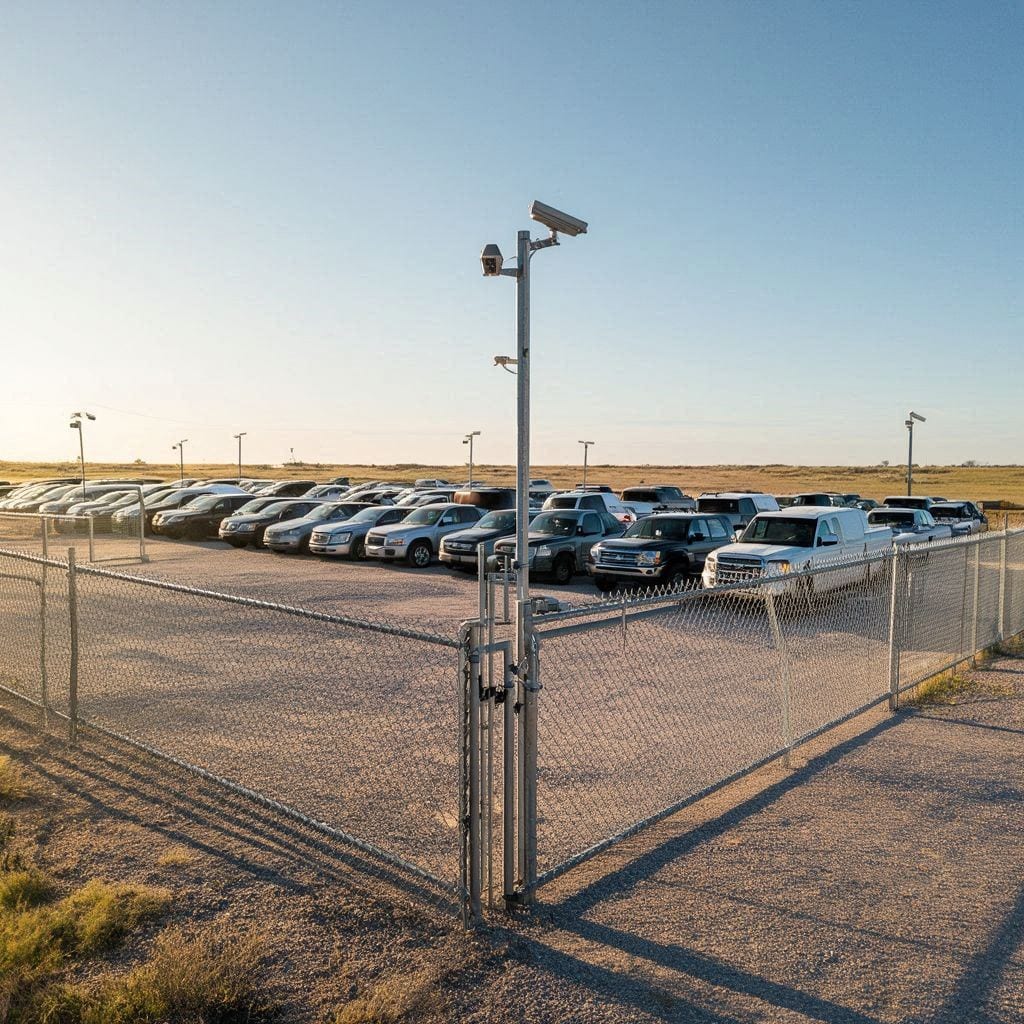
If your vehicle ended up in a vehicle storage facility (VSF) after one of those, or you were booted, Chapter 2308 gives you the right to a hearing on whether the tow or boot was proper. A tow you called yourself isn't a non-consent tow, so it isn't covered.
If you don't even know where your vehicle is yet, start there first — see how to find your towed car in Houston and Harris County — then come back to this.
The clock is ticking: under 14 business days
This is the part that trips people up.
You must deliver a written request for a hearing to the court before the 14th day after your vehicle was placed in the storage facility or booted. That count excludes Saturdays, Sundays, and legal holidays — so in practice you have through business day 13, a little under three weeks on the calendar. File by business day 13 to be safe.
Two things work in your favor:
- The clock doesn't start until they hand you the information you need to file the request. If the tow company or storage lot drags its feet on giving you proper notice, your window hasn't opened yet.
- No notice, no deadline. If you were never given the required notice of your rights, the 14-day limit doesn't apply, and you can request a hearing at any time.
But don't lean on those exceptions. If you miss the deadline after being properly notified, you waive your right to a hearing entirely. When in doubt, file early.
Where to file: the JP court in the tow county
You file in the justice of the peace (JP) court for the county your vehicle was towed from. (If you were booted, it's the county where the parking facility is located.)
The cost is the JP court's standard civil filing fee, which varies by county rather than being a flat number in the statute. TDLR's consumer information cites about $20; some counties run higher (Tarrant County's JP courts have listed roughly $54). Call the specific JP court and ask before you show up.
What the hearing actually decides
A tow hearing isn't a free-for-all argument about how unfair the day was. The court looks at a defined set of questions. For a towed vehicle, it comes down to two things:
- Was there probable cause to tow your vehicle in the first place?
- Did the charges exceed the legal limits — the towing fee, the storage fee, and any associated charges are each capped, and the court checks whether yours blew past those caps.
Two procedural facts to plan around:
- The hearing is held before the 21st calendar day after the court receives your request — this moves fast.
- The burden of proof is on you, the person who requested it. The tow company doesn't have to prove it was right; you have to show it was wrong. So bring everything: the itemized receipt, photos, and the tow notice.
What you can win back
If you prevail, Texas law lets the court award you real money — not just a moral victory. The court may award:
- Reimbursement of the towing, storage, and boot-removal fees you paid
- An amount equal to any overcharge above the regulated caps
- The reasonable cost of photographs you submitted as evidence
- Your court costs and attorney's fees
And there's a bigger stick. Separate from the hearing, a towing or booting company that violates Chapter 2308 is civilly liable to you for your damages plus the fees assessed — and you don't have to prove negligence. If the violation was intentional, knowing, or reckless, the company is liable for $1,000 plus three times the towing, storage, or booting fees.
One more protection: if either side appeals the decision, the court can't require an appeal bond to keep the case going.
How to request your hearing, step by step
- Find your vehicle and collect the paperwork. Get the itemized receipt and the written notice of your rights the storage facility is required to give you when it releases the vehicle.
- Photograph everything — the tow-away warning sign at the location, the lot, your vehicle, and every receipt. Photos are admissible, and their reasonable cost is recoverable if you win.
- Write your request. Include copies of the receipts and notices you received. Many JP courts have a fill-in tow-hearing form; call and ask.
- Deliver it to the correct JP court — the one in the county the vehicle was towed from — before business-day 14.
- Pay the filing fee (confirm the amount with that court first).
- Show up to the hearing within 21 days with your evidence organized and ready.
Were you overcharged? Know the caps
A big share of tow disputes aren't really about whether the tow happened — they're about the bill. Texas regulates the maximum a non-consent tow and daily storage can cost, and a charge over those limits is exactly what the hearing exists to claw back. If your invoice looks high, compare it against the current figures in our Houston tow cost guide before you decide whether it's worth filing.
Also worth doing: file a TDLR complaint
A tow hearing gets your money back. A complaint to the Texas Department of Licensing and Regulation (TDLR) — the agency that licenses tow operators and storage facilities — goes after the operator's license. The two are independent, and you can pursue both. File a complaint at tdlr.texas.gov. The complaint has no 14-day deadline, but the hearing does, so handle the hearing first.
Where we stand at Smith Towing
We run private-property and other non-consent tows by the book: fees inside the state caps, an itemized receipt every time, and the written notice of your rights when we release a vehicle. We're publishing this because an informed customer is the best defense against the handful of operators who count on you not knowing the rules.
If you've got a question about a tow — one of ours or anyone else's — call us at (832) 360-7122. We can't stand in for you at a hearing, but we'll give you a straight answer and point you the right way.
Need a tow done right the first time? Call (832) 360-7122 — 24/7 across Houston, Crosby, Baytown, Kingwood, and the eastern corridor. For non-consent towing done within the law, see our private-property towing page.
FREQUENTLY ASKED QUESTIONS
RELATED GUIDES
ALREADY PAID THE LOT? WE'LL TOW IT HOME
Smith moves vehicles you've already located and released — we can't look up or release a car someone else towed.