Diesel ·
DEF Light Won't Go Off After a Fill? SPN 3364 vs 4364 Explained
You added DEF, the tank is full, and the light is still on. Now the dash is showing a code — maybe SPN 3364, maybe 4364 — and you are trying to figure out whether you can keep running or whether you are about to get stranded.
Here is what those two codes actually mean, why they are different problems, and why the worst thing you can do is clear the code and keep driving.
On This Page
Quick answer
A DEF light that stays on after a fill is almost never about the level — it is quality or dosing. SPN 3364 flags DEF quality: the fluid tested outside the required concentration (contaminated, diluted, wrong fluid, or a bad quality sensor). SPN 4364, usually with FMI 18, is different — it flags low SCR efficiency, meaning the aftertreatment is not reducing enough NOx out of the exhaust.
Bad DEF can set either one, but 4364 can also come from a failed NOx sensor, a weak doser, or a tired catalyst — so they are diagnosed differently. Either way the truck has started an inducement countdown that ends in a speed derate, so this is a fix-now, not a fix-later. And clearing the code (or deleting the system) does not fix it.
SPN 3364 — DEF quality
SPN 3364 means the truck checked your diesel exhaust fluid and did not like what it found. DEF is supposed to be about 32.5% urea and the rest deionized water, in a tight range. When the reading falls outside that window, the code sets.
The usual causes:
- Contaminated or diluted DEF — water added, a dirty container, or the wrong fluid in the tank.
- Old or degraded DEF — it breaks down with heat and age, and Gulf Coast heat is hard on it.
- A failed DEF quality sensor — the fluid is fine, but the sensor reading it is not.
Because it is a quality problem, adding more DEF does nothing — you are just adding more of a fluid the truck already rejected, or filling around a bad sensor. It has to be tested to know which.
SPN 4364 (FMI 18) — SCR efficiency, a different problem
SPN 4364 is a step downstream. It means the SCR is not converting enough NOx — the aftertreatment is not cleaning the exhaust to the level the truck expects. FMI 18 is the "below normal, moderately severe" version.
Bad DEF quality can cause this, which is why 3364 and 4364 often show up together. But 4364 on its own points at:
- A failed NOx sensor (inlet or outlet) reading the exhaust wrong.
- A weak or clogged doser not spraying enough DEF into the SCR.
- A degraded SCR catalyst or an exhaust leak upstream.
That is why you cannot treat 4364 as "just bad DEF." It needs the sensors and the doser checked, not just a fresh jug of fluid.
| Code | What it flags | Common causes |
|---|---|---|
| SPN 3364 | DEF quality out of spec | Contaminated, diluted, or wrong DEF; bad DEF quality sensor |
| SPN 4364 (FMI 18) | SCR not reducing enough NOx | Bad DEF quality, failed NOx sensor, weak doser, tired catalyst |
| SPN 5246 | SCR inducement active | The countdown ran out — you are being derated now |
Why "just clear the code" (or delete it) is the wrong move
The internet's favorite answers to these codes are the two worst ones.
Clearing the code feels like a fix because the light goes off — for a minute. But clearing does not change the DEF, the sensor, or the doser, so the fault comes right back, and every time the countdown restarts you are one step closer to a derate on the shoulder.
Deleting the SCR system to kill the light for good is illegal on a truck driven on the road, and it still leaves the actual problem in place — you have just spent money to hide a fault instead of fixing it. We keep emissions systems working the way they are designed and diagnose the real cause instead. See our diesel repair shop for how we handle aftertreatment the right way.
⚠️ Clearing or deleting does not fix a DEF code — it hides it. SPN 3364 and 4364 come back until the DEF, the sensor, or the doser is actually repaired, and the inducement countdown keeps running the whole time. The honest fix is to test the fluid, check the sensor and doser, repair the cause, then reset — so the light stays off and the truck does not derate.
What actually fixes it — and the countdown you're racing
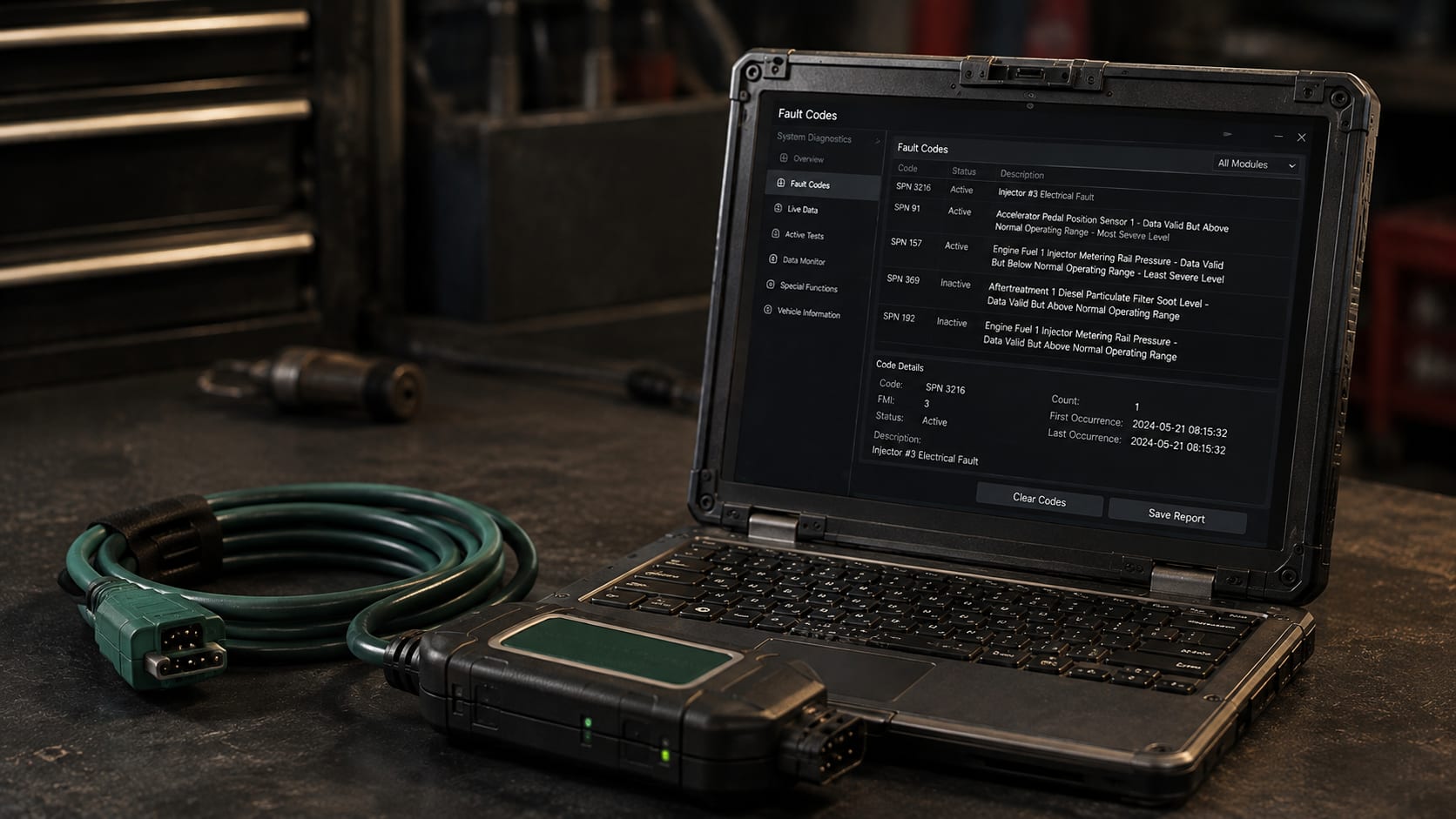
The real diagnosis is short and specific: test the DEF quality with a refractometer, read the DEF quality sensor and the NOx sensors, and check that the doser is spraying. That tells you whether you are replacing fluid, a sensor, or a doser — instead of guessing.
And you are on a clock. These faults start an inducement that climbs from a light, to a reduced speed limit, to a 5 mph crawl. If your truck has already stepped down, read what a 5 mph DEF derate means — but the whole point of catching it at the code is to fix it before it gets there.
Get it read before the derate
The cheapest version of this repair is the one you do while the truck still drives. Once it is at a speed limit or a crawl, you are fixing the same fault plus dealing with a stranded truck. Catch it at the code.
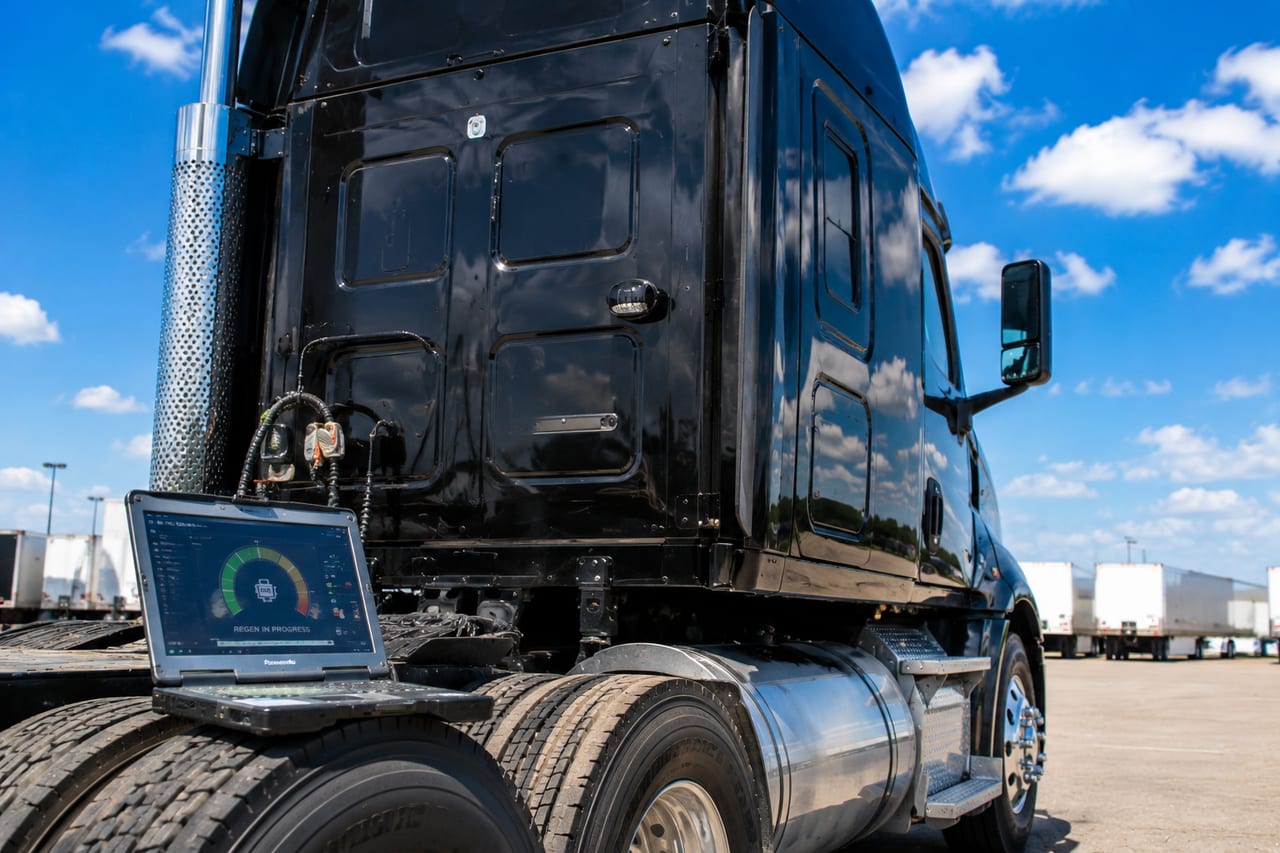
We read the active and stored codes, test the actual DEF, and check the sensors and doser to find what is really setting 3364 or 4364 before anyone replaces a part — then repair and reset. See how the workup goes on our mobile diesel diagnostics page.
DEF light stuck on after a fill? Don't clear it and hope. Call (832) 360-7122 — we test the DEF quality and the sensors, find what is really setting SPN 3364 or 4364, and fix it before the derate hits. We can come to you or bring the truck into our Crosby diesel shop.
FREQUENTLY ASKED QUESTIONS
RELATED GUIDES
NEED HELP RIGHT NOW?
Our dispatcher picks up personally. No voicemail, no queue.