Diesel ·
Semi Won't Start? No-Crank vs. Cranks-But-Won't-Start
A diesel that will not start is a bad way to begin a day — but it is also a solvable one, once you know which of two very different problems you are looking at. Half the trucks we get called out for are a battery or a cable. The other half never should have been cranked as long as they were.
Here is how to tell in the first minute whether you have an electrical problem or a fuel problem, what each one usually costs, and when to stop turning the key and make the call.
On This Page
Quick answer
First, listen. No-crank — nothing turns over, or you get a single click — is almost always electrical: batteries, cables, or the starter. On a truck with several batteries, one weak battery can drag the whole pack down, so they all have to test good.
Cranks-but-won't-start — the engine spins normally but never fires — is fuel, air, or compression: air in the fuel or a lost prime, a plugged or gelled fuel filter, a failing lift pump, a high-pressure pump fault, or a cam/crank sensor. If wrong fuel is even a possibility, stop cranking now — every crank spreads the damage.
Sort which one you have and you are already halfway to the fix. They are completely different repairs.
First, which problem do you have?
Turn the key and listen to what the engine does — not what the dash says.
- If the engine does not turn over — silence, or a click, or it barely rolls and quits — that is a no-crank. Go to the electrical section.
- If the engine spins over normally but never catches, that is a cranks-but-won't-start. Go to the fuel section.
That one distinction saves you from chasing the wrong system. A truck that cranks strong does not have a battery problem, and a truck that will not turn over does not have a fuel problem. Nail this first.
No-crank: it is almost always electrical
| What you notice | Likely cause | Typical fix |
|---|---|---|
| Nothing at all, dead dash | Discharged batteries or a main disconnect left off | Charge or replace batteries, check the disconnect |
| One loud click, no crank | Weak batteries or a bad starter solenoid | Load-test batteries, test the starter |
| Dash lights up but won't crank | Corroded or loose cables, bad starter, ignition switch | Clean or replace cables, test the starter |
| Cranks slow, then quits | One weak battery dragging the pack down | Load-test each battery individually |
The batteries are the first and most common answer, and the trap is testing the pack as a whole. On a truck with several batteries, one bad cell can make the good ones look weak — so each battery gets load-tested on its own. After batteries, it is cables and connections (the cheap, overlooked fix), then the starter and solenoid.
Cranks but won't start: fuel, air, or compression
| What you notice | Likely cause | Typical fix |
|---|---|---|
| Cranks normal, ran fine before, now no fire | Air in the fuel / lost prime, or a plugged filter | Prime the system, replace the fuel filter |
| Cranks, no start, cold morning | Gelled fuel or weak cold-start heat | Warm and ungel the fuel, replace filters |
| Cranks, no start right after fuel work | Air pulled into the system | Bleed and prime the fuel system |
| Cranks, sudden no-start on the road | Lift pump, high-pressure pump, or cam/crank sensor | Diagnose fuel pressure and sensors |
When it spins but will not fire, the engine is not getting fuel, or not getting it under pressure, at the right time. Air in the fuel is the quiet one — a truck that will not restart after a filter change or running low on fuel has usually pulled air in and lost its prime. In winter, gelled fuel does the same thing. A sudden no-start on the highway points more at a pump or a sensor.
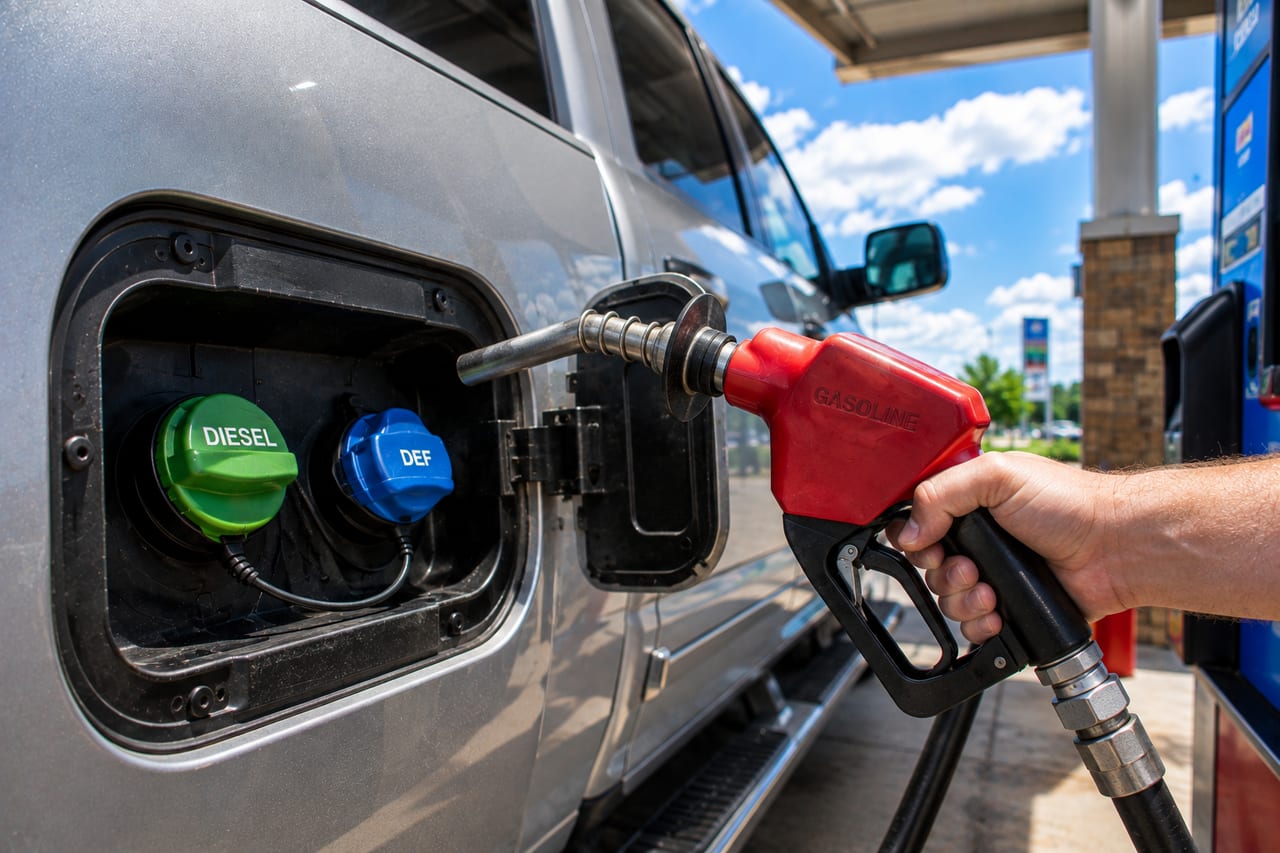
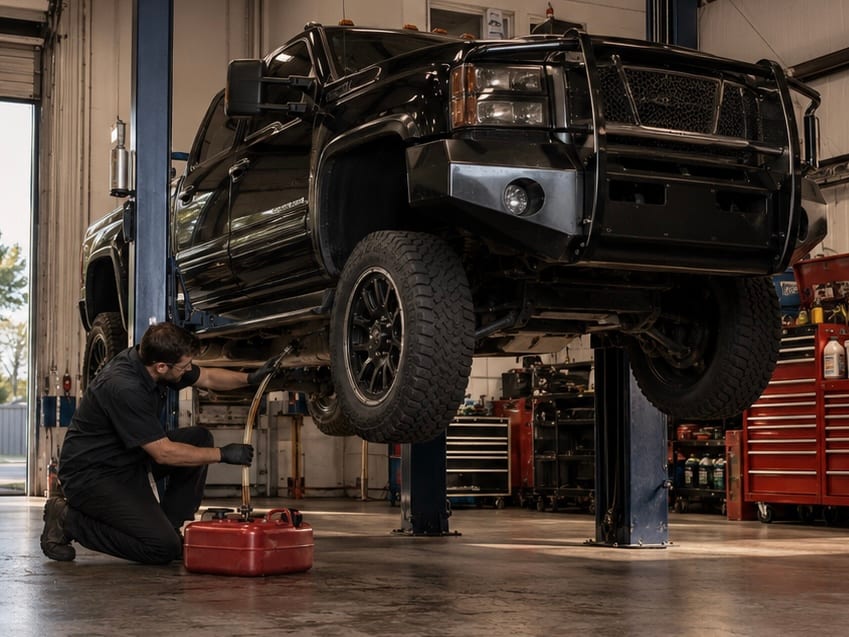
⚠️ If wrong fuel is even possible, stop cranking. If there is any chance the wrong fuel went into the tank, do not keep cranking to figure out a no-start — every crank pulls contamination into the pump and injectors and turns a drain job into a repair. Leave the key alone and read wrong fuel in a diesel first. The same goes for a hard-start pickup with metal in the fuel filter — that is a failing CP4 pump, and cranking spreads the metal.
What each one costs — and when to stop cranking
The good news about a no-crank is that it is usually the cheap end: batteries, cables, a starter. Those are real money on a heavy truck, but they are bounded and predictable.
Cranks-but-won't-start covers a wider range. A lost prime or a plugged filter is a quick, inexpensive fix. A lift pump is more. A high-pressure pump or an injection fault is the expensive end. That spread is exactly why guessing is costly here — the honest move is to read fuel pressure and check the sensors before anyone replaces a pump.
Either way, do not crank it flat. Long cranking drains the batteries you may need and cooks the starter, and it will not talk a fuel problem into starting.
Roadside or tow: how we handle a no-start
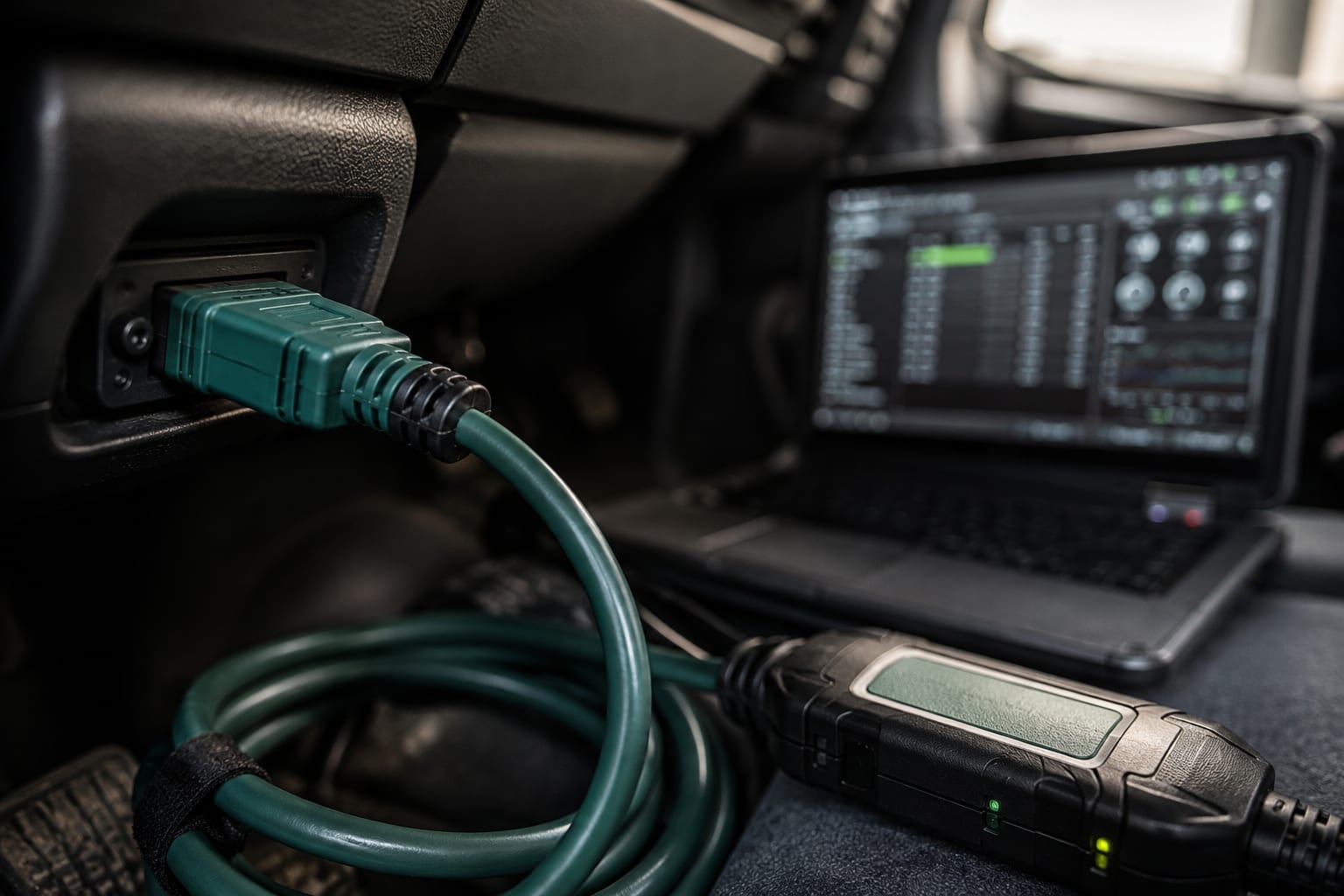
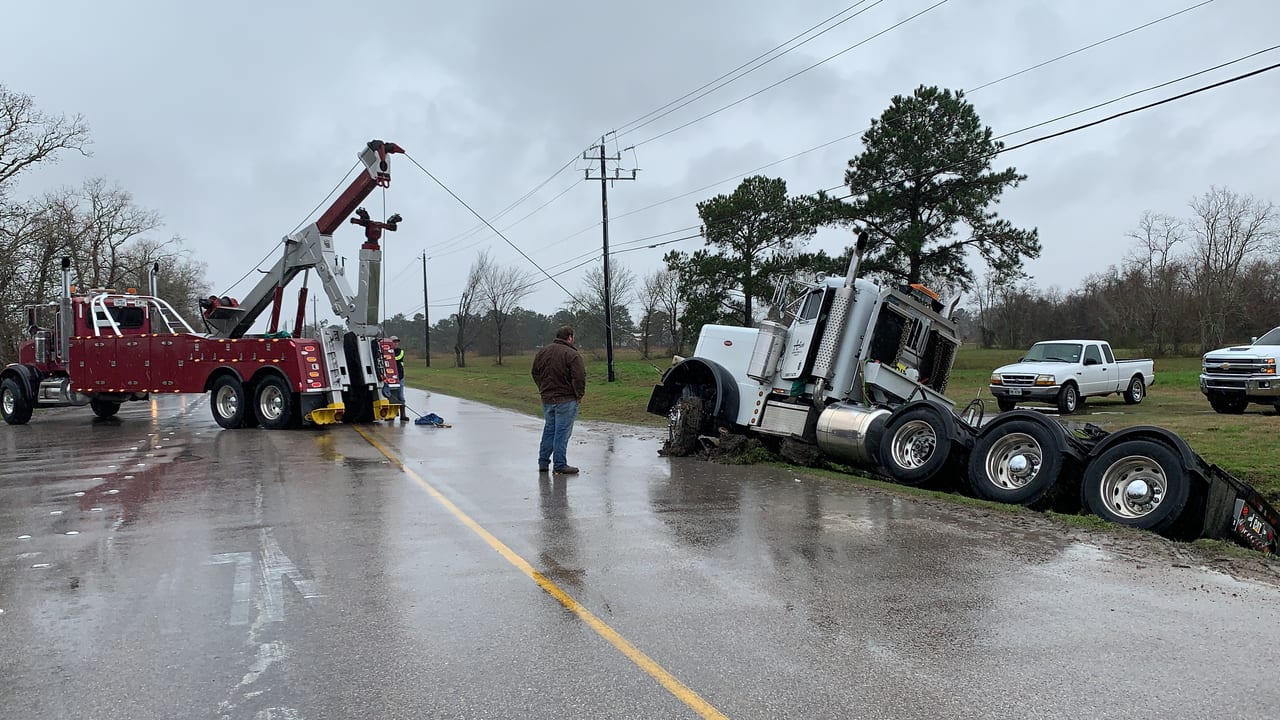
A no-start is one of the calls we run most, on the highway and in the yard, day or night. We come out, tell quickly whether it is electrical or fuel, and handle what we can on the spot — jump or replace batteries, clean up cables, prime the system, change filters. If it turns out to be a pump or a deeper fuel-system fault, the same yard runs our recovery gear, so we tow it to our Crosby diesel shop in one move instead of leaving you to crank it into worse shape. Heavy-truck no-starts also feed straight into our semi truck repair shop.
Dead on the shoulder or in the yard? Don't crank it flat. Call (832) 360-7122 — a real dispatcher answers 24/7, and we tell you fast whether it is a battery or a fuel problem, fix what we can on the spot, and tow it to our Crosby shop if it needs more. See mobile diesel diagnostics for how the workup goes.
FREQUENTLY ASKED QUESTIONS
RELATED GUIDES
NEED HELP RIGHT NOW?
Our dispatcher picks up personally. No voicemail, no queue.